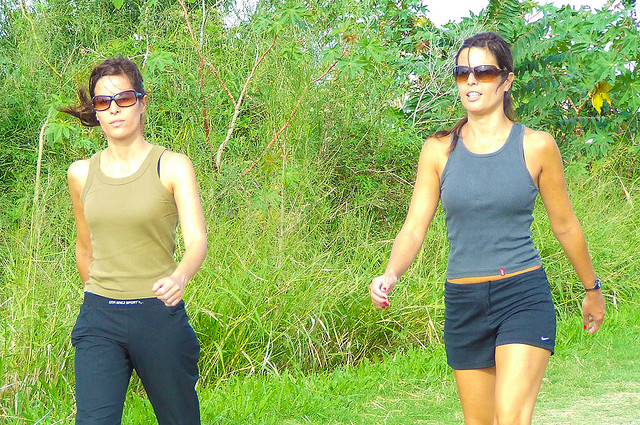
Burn Fat, Build Willpower, and Get Healthier With This EASY Walking Program

How to Start Walking Every Single Day in One Month Or Less – Introducing the “1 Minute a Day” Walking Program

Have you ever wondered why they don’t say, “walk for your life?” I mean, seriously! Walking has been linked to increases in nearly all measurable health markers, and decreases in the risk of nearly all preventable diseases? I know, big surprise, right? Of course, everyone knows that walking is really good for us, and people like Dr. Mike Evans will show you why walking might actually be the single best thing for our health.

But what if I told you that not only is walking a universally beneficial activity that is accessible to nearly everyone with two good legs, but it’s also very easy to do. And I’m not kidding either. Pick up one foot, lean forward slightly and then put it down. Go ahead. Try it right now. Then do that same motion with your other leg. See? It’s almost like we were made for walking. Keep practicing, and it’ll get smoother in no time.

John

Around here, we take walking seriously.

So, we’ve identified something that is incredibly good for us. We’ve also identified that you can do it yourself – or at least well enough to not require a personal trainer at this stage. You can book some sessions to improve your technique later.

So, now that you can do something that’s good for you, what’s stopping you from getting out there and soaking up all the rewards that come with regular walking? Ah, willpower – of course! Most people would love to have a regular habit of walking and experience the myriad of benefits to be had. The problem is that, for whatever reason, it just doesn’t happen. That’s an easy one, too, and I’ll make you a deal. If you will commit just 1 more minute a day, then I’ll get you into a regular walking habit in one month or less – seriously. I’m going out on a limb here, but this may just be the easiest walking program ever devised. In fact, the first step is so easy that we’re going to get started right now. Yes, right now.

The “1 Minute a Day” Walking Program

Grab a watch, cell phone, or anything that will help you measure a minute (or you could always just count, “one one thousand, two one thousand…” for now). Now that you have your time keeping apparatus handy or heady, as the case may be, I want you to stand up and walk for 30 seconds straight – without stopping. After the 30 seconds is over, immediately turn around and walk right back here and then continue reading.
Continue reading Burn Fat, Build Willpower, and Get Healthier With This EASY Walking Program

How to Burn More Calories Than a Triathlete on Adrenaline

You wanna know how to to burn more calories? You sure? Because what I’m about to share with you isn’t gonna be easy.

After a few rounds of this, your legs will literally feel like they’re on fire, which is really quite ironic since they’ll be dripping with sweat. Your lungs will have you believe you’re a fire-breathing dragon and your heart will feel like it’s pumping battery acid. And if you’re a redhead like me, your entire cranium may morph into a fireball for a few minutes afterward. It’s ok, I’ve survived this many times myself – just don’t inhale too much smoke. Now, if that wasn’t enough already, the good news is that you’ll also be burning calories and burning fat like a pro. If that sounds like a fun time, then you and I share some of the same character flaws, and this will be right up your alley.

How to burn more calories

You won't be smiling when you're done with this. Image credit: http://www.flickr.com/photos/lululemonathletica/

I know, I know. You’re probably looking for a top 10 list of suggestions for how to burn more calories – with neatly arranged bullet points and liberal use of the bold feature. But the truth is that burning calories isn’t exactly rocket-science, folks. Everything we do burns calories. Eating burns calories. Digestion burns calories. I know it’s hard to believe, but sleeping and even just thinking burn calories, too. So, if you’re looking for advice like “drink more caffeinated green tea and chew gum all day,” then look elsewhere sweetie-pie. This place is reserved for men and women of resolve. There are no wusses in this corner.
Continue reading How to Burn More Calories Than a Triathlete on Adrenaline

The Little-Known Philosophy of Gentle Running

Lessons from Joe Henderson’s book Long Slow Distance: The Humane Way to Train

running

John running at one of his favorite spots in Clough State Park, NH.

If you enjoy running like so many millions of American’s do, or even if you hate running and don’t understand those wacko’s who actually derive pleasure from miles upon miles of road and trail work, then you’ll probably love reading Joe Henderson’s book Long Slow Distance. Joe has been running and racing since the 1950′s and has completed over 700 races. He was formerly the chief editor for Runners World magazine and wrote articles for it for over 30 years, along with authoring over two dozen books on the subject of running. Since 1982, Joe has also maintained a Running Commentary, providing valuable nuggets of advice he’s picked up along his journey. This guy is a runner through and through – the real deal.

Joe still runs today, which is remarkable because most people Joe’s age couldn’t run year-round if they wanted to. Running is one of the highest injury-producing sports, but people like Joe are proving to the world that it doesn’t have to be this way. Running injuries don’t need to be the norm, and I think Joe’s training philosophy can go a long way towards this end. I like to call it the philosophy of gentle running, which you’re going to get a taste of in the next few minutes.
Continue reading The Little-Known Philosophy of Gentle Running

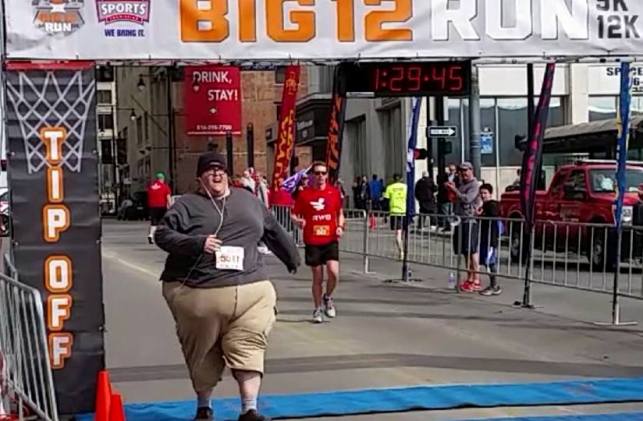
How to Lose a 5k Road Race

Up until a few minutes ago, I had NO IDEA it was National Running Day T-O-D-A-Y! Actually, I didn’t even know we had holidays for running until now. They even have an official website. Spiffy – and very exciting too! I wasn’t planning on going for a run today, but I will be now that I know I’ll be sharing the roads with countless others. We’ll see if Ronin is up for it on a hot, sunny day like today (Ronin is my “sorta-kinda-really-doesn’t-feel-like-running-THAT-far-today” dog) This event sparked a reminder for a little story about a recent road race I “competed” in with a couple of my brothers.

Three goofy-looking people eager to lose a road race.

I still remember my cross country running days like they were yesterday. The anticipation before a big race and the stomach butterflies that came along with the little mind gremlins. I remember the dry mouth, achy knees, and sweat tickling me as it dripped off the tip of my nose. I remember the determination I had to run as hard and fast as I possibly could every step – straight through the finish line. I remember the dizziness, wheezing and coughing afterward, and that I would lace up my shoes again the next day for more. I ran thousands of miles and dozens of cross country races before my body broke down and doctors told me I would never run again. That was about eight years ago.

But last month on a beautiful Saturday morning, I wasn’t experiencing any of that. I wasn’t nervous or tired. I wasn’t in pain or at all uncomfortable. I wasn’t even in a rush. I was relaxed and even comfortable as I bounded along the back roads of Bedford, NH – the town where I grew up. But before we get to that, let’s back up to the beginning of the race.
Continue reading How to Lose a 5k Road Race

Persistence Hunting and Endurance Running: 5 Tips to Run Effortlessly

Our dog, Ronin (aka fluff-head, muffin-top, puppy, and the "woochy-wooch").

On a long run with my dog through Clough State Park (about 2 hours, distance unknown), I experienced something remarkable about functional human capacities. It was a warm day, and I was running barefoot on a trail loop that is comprised of asphalt, sand, gravel, stone, and packed dirt. Ronin was off-leash running at his own pace and I was maintaining what felt like a 10 minute mile pace – slow and easy.

When we go for an off-leash run, Ronin likes to take the lead until he finds something interesting to smell. So, he often charges ahead, trots for a bit, and then stops to investigate anything and everything. It’s a beautiful display of the balance between working hard and resting just enough to keep going. Ronin knows when we’re going to be out for awhile, so he paces himself accordingly for a longer run.

Here’s where it gets interesting. After about 90 minutes into the run, I noticed that Ronin was no longer charging ahead of me. Rather, he was staying closer to me and maintaining a trot for much longer than before. Eventually, he fell behind and the distance between Ronin and I began steadily increasing. He simply couldn’t keep up with my pace anymore – even though I was maintaining speed and not running fast by anyone’s standards (a 10 minute mile, c’mon!). Granted, Ronin is an akita, which were bred for two purposes, 1) hunting bears, and 2) guarding a home or property. Sure, he’s a northern breed, with some of the most ancient lines of heritage of any type of canine, but he’s not a sled dog, if you know what I mean. He wasn’t bred to have exceptional physical endurance levels like a Siberian husky or any type of herding dog. In all the dog breed books, akitas are described as athletic with moderate physical activity needs.

But still, this is an animal, a strong and athletic animal in his prime (still has all that puppy energy). And here I was outrunning him into significant fatigue. Had we continued for another hour or two, he would have been run to utter exhaustion just trying to keep up with his pack.

This got me thinking about human capacities, especially when it comes to running. Last year and for the first time in my life, I had conditioned myself to the point where running was almost effortless (do note that I’ve never run for more than 3 hours straight). More specifically, I was running with absolutely no pain or discomfort, and my level of exertion was very low. My breathing wasn’t elevated when I ran, and when I stopped I didn’t have to slow my breathing or catch my breath. Of course, an increase in speed would change that altogether! However, running didn’t feel like work at all, and sometimes it was just as comfortable as walking. More often than not, I would finish a run refreshed, revitalized, and with seemingly more energy than when I started. Today, I’m finally able to relax while I run – something that would shock the doctors who told me I would never be able to run again.
Continue reading Persistence Hunting and Endurance Running: 5 Ways to Run Effortlessly

Learn the Skill of Barefoot Running

Plus Follow-up From Barefoot Ken Bob’s Running Workshop

Click for Larger Image

Our culture has made a mess of running. You’d think a simple, pleasurable physical activity wouldn’t produce widespread problems, but we’ve butchered running to the point of near death with it having some of the highest injury statistics of all physical activities. Fortunately, there’s a revolution sweeping the running community that is changing people’s perspectives about running – and it all revolves around the idea of going barefoot. The coolest part is that anyone can start re-learning how to run immediately, and you won’t even need to buy expensive, high-tech shoes. Before we get to the tutorial, here’s some background information to whet your appetite.

A couple weeks ago, Barefoot Ken Bob Saxton (interview with him here) visited Cambridge, MA to teach a barefoot running workshop. It was raining for the 2 hour presentation and Q+A, but that didn’t stop dozens of runners from coming out to learn from one of the worlds best barefoot running experts. I’ve never seen so many people barefoot in my life (except at the beach)! So much was shared during that time, and I wanted to forward on some of the most valuable advice I gleaned from the experience.
Continue reading Learn the Skill of Barefoot Running

Barefoot Running on the Snow - 5 Tips to Help You Make the Transition

We finally had our first significant snowfall today. I think we got just over 12 inches (approx 30cm). My wife came home from work a little early and we took our dog, Ronin, to Clough State Park for some gallivanting. Realizing I had a compadre who could hold the camera, I thought it would be a great opportunity for my first barefoot run in the snow. That, and since I’ve never done this before, I thought it would be a good idea if someone else was there… er, in case, you know, I slipped and died or something.

Here is a video account of the run. You can decide if I’m crazy, stupid, or daring…

Barefoot Running in the Snow

So, I ran 1 mile barefoot, twice as far as I had expected to make it. Quite honestly, I figured that the cold would be too much for me and that I would wimp out. But I set my mind on completing the task no matter what, and after a half mile I felt like I could go much longer. I was dressed plenty warm and my body temperature stayed warm throughout the short run. Actually, the longer I had been running, the warmer my feet got.

I think 1 mile was a good starting point for me personally. Having the endurance to run several miles is great, but it’s safer to progress as gradually as possible whenever changing one of the variables.

I don’t recommend that anyone just jump right into barefoot running, and especially not going barefoot in the snow. It’s a skill that must be developed incrementally. I’ve spent the entire year going barefoot and my intuition assured me that I was ready for something of this nature. If you’d like some more information about going barefoot, feel free to read my Definitive Guide to Going Barefoot.

On the other hand, if you HAVE been running barefoot already. If your feet and body are conditioned for shodless running, and you think that you’re ready for a barefoot run in the snow, here are some tips that may help. Continue reading Barefoot Running on the Snow – 5 Tips to Help You Make the Transition

Page 1 of 212