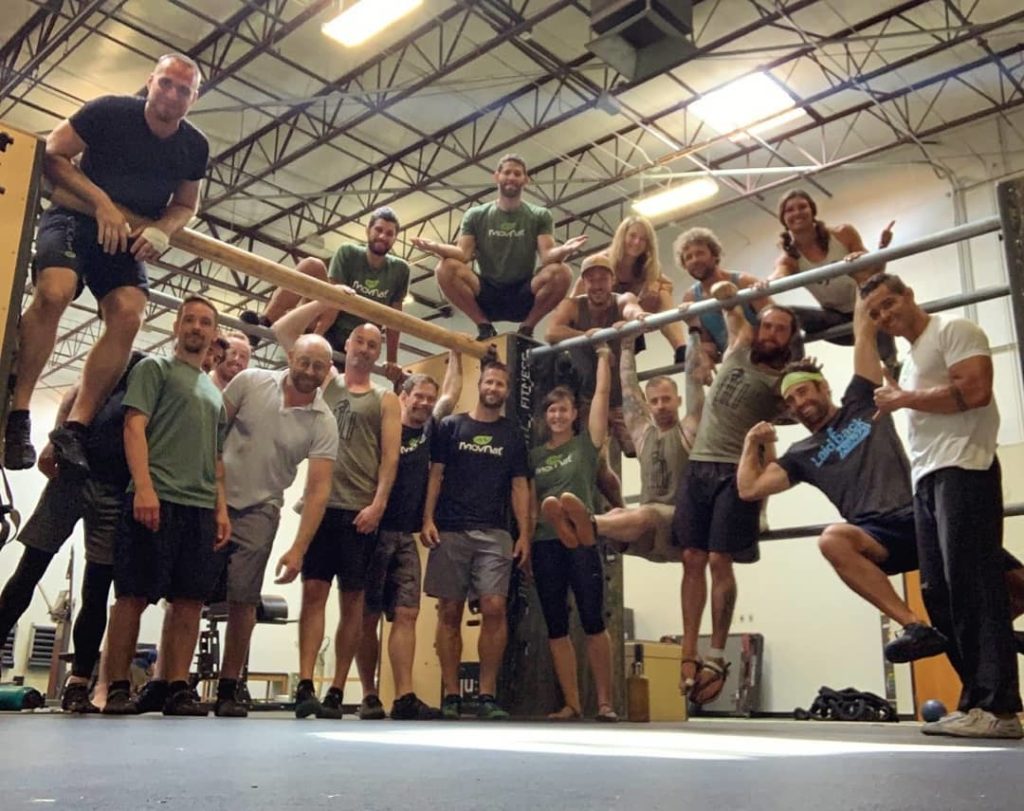
Interview with MovNat Master Instructor – Clifton Harski

MovNat Master Instructor - Clifton Harski

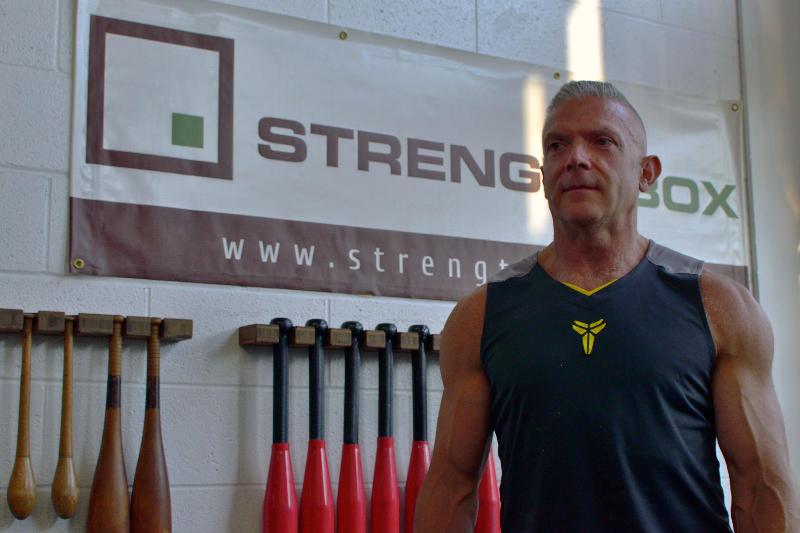
By now, you guys probably know that I’m a pretty big fan of MovNat, which is why I was ecstatic when one of MovNat’s top instructors agreed to an exclusive interview just for you. I want to introduce you to Clifton Harski, who is a MovNat Master-Level Instructor. Clifton is involved with many aspects of the MovNat mission, but he’s particularly well-known for conducting workshops around the country. In this interview, he shares a lot of great insight about the MovNat system. Enjoy!
Continue reading Interview with MovNat Master Instructor – Clifton Harski

Baby Steps: What a Baby Can Teach You About Movement

This video speaks for itself, so I’m not going to say much.

I will request that you don’t merely watch the video, staring blankly at the screen in deep thought, but actually become an active participant and follow along. After about 1 second, it’s going to instruct you: “to begin, please lie on your [...]

MovNat Combo Training Video

I was privileged to be one of the first people to attend Erwan’s 5-day USA seminars at Summersville Lake, WV. That event has been one of the single most positive experiences I’ve ever had, and I would recommend it to anyone with even a hint of interest in sports, fitness, or any type of [...]

Persistence Hunting and Endurance Running: 5 Tips to Run Effortlessly

Our dog, Ronin (aka fluff-head, muffin-top, puppy, and the "woochy-wooch").

On a long run with my dog through Clough State Park (about 2 hours, distance unknown), I experienced something remarkable about functional human capacities. It was a warm day, and I was running barefoot on a trail loop that is comprised of asphalt, sand, gravel, stone, and packed dirt. Ronin was off-leash running at his own pace and I was maintaining what felt like a 10 minute mile pace – slow and easy.

When we go for an off-leash run, Ronin likes to take the lead until he finds something interesting to smell. So, he often charges ahead, trots for a bit, and then stops to investigate anything and everything. It’s a beautiful display of the balance between working hard and resting just enough to keep going. Ronin knows when we’re going to be out for awhile, so he paces himself accordingly for a longer run.

Here’s where it gets interesting. After about 90 minutes into the run, I noticed that Ronin was no longer charging ahead of me. Rather, he was staying closer to me and maintaining a trot for much longer than before. Eventually, he fell behind and the distance between Ronin and I began steadily increasing. He simply couldn’t keep up with my pace anymore – even though I was maintaining speed and not running fast by anyone’s standards (a 10 minute mile, c’mon!). Granted, Ronin is an akita, which were bred for two purposes, 1) hunting bears, and 2) guarding a home or property. Sure, he’s a northern breed, with some of the most ancient lines of heritage of any type of canine, but he’s not a sled dog, if you know what I mean. He wasn’t bred to have exceptional physical endurance levels like a Siberian husky or any type of herding dog. In all the dog breed books, akitas are described as athletic with moderate physical activity needs.

But still, this is an animal, a strong and athletic animal in his prime (still has all that puppy energy). And here I was outrunning him into significant fatigue. Had we continued for another hour or two, he would have been run to utter exhaustion just trying to keep up with his pack.

This got me thinking about human capacities, especially when it comes to running. Last year and for the first time in my life, I had conditioned myself to the point where running was almost effortless (do note that I’ve never run for more than 3 hours straight). More specifically, I was running with absolutely no pain or discomfort, and my level of exertion was very low. My breathing wasn’t elevated when I ran, and when I stopped I didn’t have to slow my breathing or catch my breath. Of course, an increase in speed would change that altogether! However, running didn’t feel like work at all, and sometimes it was just as comfortable as walking. More often than not, I would finish a run refreshed, revitalized, and with seemingly more energy than when I started. Today, I’m finally able to relax while I run – something that would shock the doctors who told me I would never be able to run again.
Continue reading Persistence Hunting and Endurance Running: 5 Ways to Run Effortlessly

Natural Movement Doesn't Come Naturally: You Weren't Born Perfect

Natural movement has become a trendy topic these days with the rapidly rising awareness of parkour, freerunning, primal fitness, barefooting, and most recently, MovNat, which teaches the “natural movement training system.” Just the phrase itself, natural movement, begs an explanation. What is natural movement, and more importantly, are some movements more natural than others? If we can postulate that certain human movements are natural, then logically, some other movements must be unnatural. This creates problems in the fitness and natural movement communities because one group will argue that their movements are natural, and the other groups will disagree. This article will explore the middle ground that all parties mutually agree upon. By the end, you will have a working definition of natural movement and you’ll also understand the irony that natural movement doesn’t come naturally.

What is Natural Movement?

It might not be practical, but it's still natural!

There is no single accepted definition for natural movement because everyone has a different perspective about what the term natural implies. Some people argue that natural movement is only possible in a natural environment (think woodlands or tundra). Others argue that natural movement is possible in any environment that humans inhabit. Still others claim that natural movement must meet specific criteria before it is deemed “natural” (such as serving a practical purpose, for instance – if it’s not practical, it can’t be natural, after all – right?). By now, you can see the many disparities that arise out of the vagueness of the phrase natural movement.

We know that the term natural is defined as “of, relating to, or concerning nature.” A simpler definition is “in accordance with nature.” Therefore, natural movement is any movement that is in accordance with nature. As humans, we are of nature. Therefore, the movement capacities we have are natural. So, it’s logical to claim that any possible human movement is a natural movement.

This is most obvious with movements such as walking, running, and lifting. But within the spectrum of possible human movement, we must include such practices as acrobatics, athletics, martial art, dance, and even physical activities like contortionism and yoga, which may seem quite unnatural from some viewpoints. By this broad definition, waving to a friend, saluting your superior, doing the splits, and embracing a loved one are all natural movements. Continue reading Natural Movement Doesn’t Come Naturally: You Weren’t Born Perfect