
I thought I had seen it all, but I guess I was wrong. I’m sorry, but this just hurts.
Continue reading CrossFit at its Worst – Don’t Try This At Home!
|
||||
|
I thought I had seen it all, but I guess I was wrong. I’m sorry, but this just hurts.
This article and video is about how to do pushups with optimal technique. There are a ton of pushup technique videos and tutorials circulating the web, and I’ve viewed many of them over the years. But adhering to a couple of vague and generic technique tips isn’t enough to ensure proper pushup form, and unfortunately, most pushup performances these days leave a lot to be desired. I wish there wasn’t a need for me to post a pushup technique tutorial, but from what I’ve seen so far, most people still don’t know how to do this exercise correctly – let alone with optimal form. Of course, you have the usual culprits of over-extending the neck backwards, and letting the hips sag, both of which detract from spinal alignment, and thus, greatly inhibit maximal strength and power potential. But even people who do pushups with a “flat back” often still haven’t learned how to truly push something with optimal alignment, range of motion, breathing, and ultimately with the greatest force production potential. You’ve got guys and gals who can successfully flex their triceps, delts, and pec muscles, but still don’t know how to actually transfer immense force into something in front of them (i.e. the ground) again and again. Given that this is such a foundational strength training exercise that provides a host of benefits, I wanted to finally give it the attention it deserves. Check out the following video to learn exactly how to do pushups with optimal technique – including some subtle nuances in the movement that have the potential to sky-rocket your performance and pushup numbers. Even if you’ve been doing pushups for a long time, you’ll probably learn something new that will help you to do pushups even better. How to do Pushups with Optimal Technique
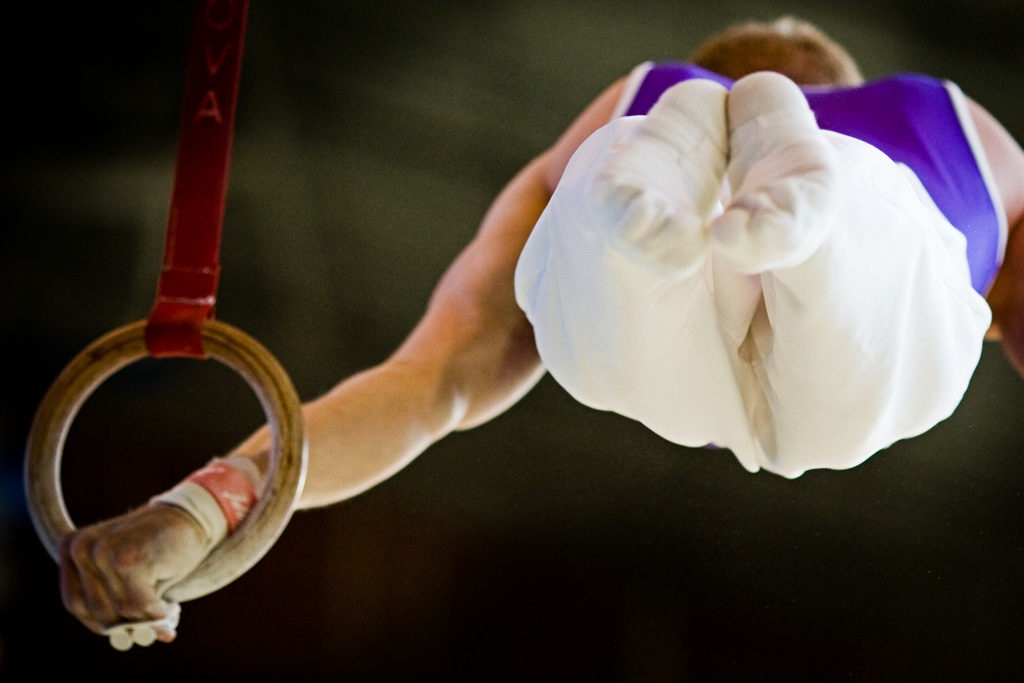
A Complete Pullups Workout Program to Help You Shatter Your Personal Record and Dramatically Improve Your Pullups Performance![]() Photo credit: http://www.flickr.com/photos/bpmphotos/ If you want to strengthen your arm and back muscles, spread your wings (lats) to create that V-tapered back appearance, and increase that critical vertical pulling strength that everyone needs, AND if you want a laser-focused pullups program that was created exactly for improving your pullup numbers, then you’ve come to the right place. Below, you’ll find a complete workout program with several pullup workouts that you can use to accomplish these goals. How I Went From 6 Deadhang Pullups to Over 30 in Only 3 MonthsBack when I was in high school, I followed a 52-week workout program right out of the book Maximum Fitness : The Complete Guide to Navy SEAL Cross Training Now, 30 pullups might not seem all that impressive with some fitness trainees regularly nailing sets of 50 or even 100 kipping pullups in a row. But here’s the thing. These were deadhang pullups, and being able to perform 30 deadhang pullups is almost unheard of – even today. I studied up on basic pullup technique, and while I didn’t understand the nuances of this movement at the time, I did make sure to follow the basic recommendations outlined in most exercise textbooks. I’m confident that anyone who is healthy and of normal weight could approximate my level of success, and today, I’m going to share my complete program for how to rapidly increase your pullup and chinup numbers.
By now, you guys probably know that I’m a pretty big fan of MovNat, which is why I was ecstatic when one of MovNat’s top instructors agreed to an exclusive interview just for you. I want to introduce you to Clifton Harski, who is a MovNat Master-Level Instructor. Clifton is involved with many aspects of the MovNat mission, but he’s particularly well-known for conducting workshops around the country. In this interview, he shares a lot of great insight about the MovNat system. Enjoy! Note: If you have not read the first part of this article, or if you don’t know the difference between kipping and deadhang pullups, then please read part 1 before moving on: Kipping Pullups VS Deadhang Pullups (Part 1). A couple years ago, I posted a brief article comparing kipping pullups and deadhang pullups. Little did I know that it would become one of my most popular posts of all time. It seems that people are very passionate about this subject, and truly want to know which technique is better. I’ve even received “hate comments” from hardcore fitness trainees who felt compelled to defend their chosen exercise. I find this ironic because in that first article, I argued that both pullup techniques have value in the right context. However, I did not explain what those contexts were. In fact, I never said that one technique was better than the other, although I did point out that the kipping pullup is the more efficient movement of the two. It seems that even the most intellectual keyboard warriors are susceptible to emotional indiscretion in times of weakness. So today, in an effort to clear up any confusion, I’m going to explain when each technique would be best employed.
The problem arises because although the pullup is simply one strength and conditioning exercise, it has many different uses. On top of that, athletes, coaches, trainers, and trainees are usually loyal to one technique over the other. Bodybuilders and powerlifters are usually fond of the deadhang pullup, and defend their classic exercise with zeal. Olympic weightlifters, on the other hand, will often stand behind the kipping pullup because it’s a great assistance exercise for the barbell snatch. Other athletes can go either way depending on their sport or coaches disposition, and some coaches and athletes draw on both techniques (e.g. gymnasts and rock climbers). So, in an attempt to be objective, I’m going to cut past all the emotional dogma when relating my opinions. Honestly, I’m starting to feel like a broken record because I say this all the time: all exercises are just specific movements that can be used in any way, shape, or form. Exercises don’t have opinions, and your body doesn’t care how you use them. Everything is an act of conditioning, and your body will condition itself based on the stimulus you provide it with – irrespective of what that stimulus is and whether or not you want the conditioning effects of it. Therefore, the coach, athlete, and trainee must decide which exercises they will use based on WHAT their goals are, WHY they have those goals and what is the best way for HOW to achieve them. It’s narrow-minded to think that one exercise is always the solution for every situation, which is why I take the middle ground on this particular issue. So, even though all exercises were not created equal, in this case, neither exercise is unconditionally better than the other. It’s just that, in general, some exercises are better suited for certain goals than others, and I’m going to explain this in more detail below. Scott Sonnon – Joint Mobility Mastery-Level Teacher There is one thing, and one thing only, that I can point to with 100% confidence and say that everyone – yes, everyone – would benefit from including in their physical practice – whether as part of an exercise program or not. That one thing is [...] It happens to every true clubbell athlete at some point. No one can avoid it forever. For me, it happened at the local YMCA in the weight training room two years ago. I was working out in the free weights section, tucked in a corner where, hopefully, nobody would bother me. Alas, my efforts to remain anti-social did not succeed for long. I had brought a pair of 15 lb clubbells with me that day, which I brought to the gym regularly, and was performing my usual routine with them. Then it happened. Despite my lack of proximity and the scowl that appeared on my face as he approached, he started his long journey from all the way across the free weights section. Picture a guy in his mid-20′s who has been training for years, but hasn’t managed to change at all. He’s cocky, and naturally, he’s also a know-it-all – despite his apparent lack of progress (25 lb curls anyone?). His pace was steady, and eyes, hungry. I tried not to make eye contact in hopes that my awkward presence would detour him to the hip adductor machine. It was no use. He walked right up to me, nearly getting his pimpled face impaled by a 15 lb clubbell traveling at the speed of light. And what does he do? He just stands there and stares at me for a moment, with an almost satisfied look on his face. “Nothing to see here – no tricks today,” I thought as I stared back into his inquisitive eyes. Then it happened. He opened his mouth and revealed his true incompetence when he said with a sinister smirk, “Hey man, those bats look great for shoulders.” Knowing full-well the implications of this ludicrous statement, I cringed at the thought of how I would respond and instinctively gripped my clubbells until my knuckles whitened. This was in part an instinctive move for self-defense purposes and also to avoid a massive forehead-slap that would have broken the sound barrier and dropped everyone in the room like flies – bodies falling into an immediate comatose state. After I had taken a deep breath and suppressed the surge of adrenaline in my veins, I looked him directly in the eyes and said what any self-respecting clubbell athlete would say, “Yeah, you got that right buddy.” And immediately, I started swinging my clubbells again, at which he chuckled and went back to whatever he was doing before. Now, I think I dissolved the situation pretty well, and most importantly, nobody got hurt. But had I been as clever as my good friend, Shane Heins, a fellow clubbell athlete and expert instructor, then I might have responded like this… Clubbell Training – More Than Meets The EyeNote: For those who are not yet familiar with clubbells, this will help you get an idea of the total cumulative training effect that clubbell training – done properly – can have on the body. In particular, note that the vast majority of exercises are actually driven by the legs and hips, channeled through the core, and extended down the arms and into the clubbell. So much for clubbells being just for grip strength and shoulder mobility. Continue reading Clubbells: Not Just For Grip Strength and Shoulder Mobility |
||||
|
Powered by WordPress & the Atahualpa Theme by BytesForAll. Discuss on our WP Forum |
||||