I tend to care about things that I can use to improve my health, make me stronger, and ultimately better prepare me for the future. If you’re in the same boat, then I’m going to share a concept with you that may challenge some of the things you know about training, stress, and adaptation. I’m also going to show you how brain-dead easy it is to start using this in your lifestyle. But you’ll have to pay attention or you might not “get” it.
I believe it was Nietzsche who said, “what doesn’t kill you, makes you stronger,” and the more we are learning about the human body, the more correct he has become with time.
You see, there’s this little phenomenon known as hormesis.
Say wha?
You know… Hormesis.
OK, I had never heard of the term either – at least not until a few months ago.
According to Mark Mattson, whom, if I’m reading this correctly, is a neuroscientist, “In the fields of biology and medicine hormesis is defined as an adaptive response of cells and organisms to a moderate (usually intermittent) stress. Examples include ischemic preconditioning, exercise, dietary energy restriction and exposures to low doses of certain phytochemicals.”
In case the PhD lingo fogged up your brain for a second there, here’s another definition from Stephan Guyenet that is a bit simpler: “Hormesis is the process by which a mild or acute stressor increases resistance to other, more intense or chronic stressors.” (source here)
So, you see, at least two people agree with Nietzsche, including a doctor, which obviously makes Friedrich uber-correct on this issue and way ahead of his time (Surely, nobody thought that about him!).
But back on point, let’s get a little more specific with this explanation from Todd Becker: “Hormesis is a biological phenomenon whereby a beneficial effect (improved health, stress tolerance, growth or longevity) results from exposure to low doses of an agent that is otherwise toxic or lethal when given at higher doses. The philosophy of Hormetism… is based upon harnessing this biological phenomenon in a deliberate and systematic way in order to increase strength and resilience.” (source here)
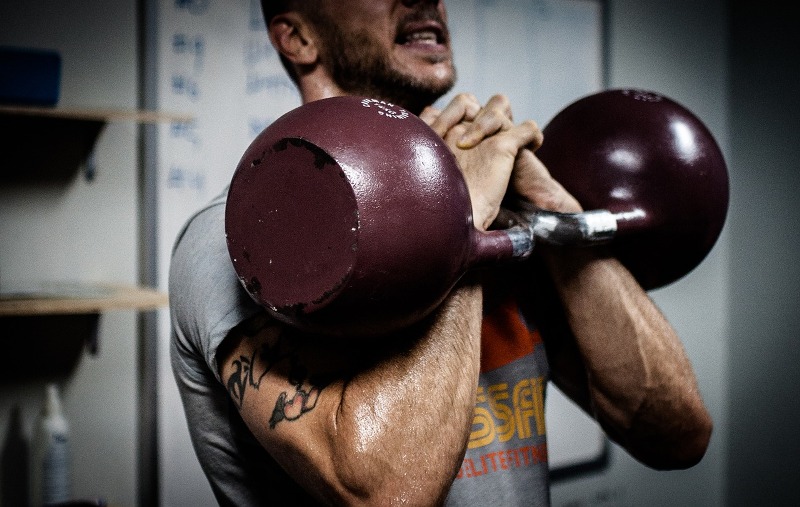
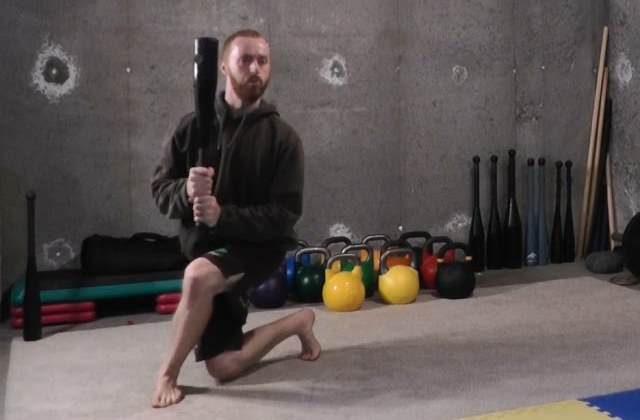
NOW we’re starting to make some sense – thanks Todd! Exercise is a perfect example of hormesis. You stress the body just enough to elicit a positive adaptation. Vaccinations are another example as is taking a cold shower. There are tons of examples out there!
Todd goes on to say, “Hormetism puts forward the thesis that progressive hormesis is a general phenomenon that applies to virtually any stressor. Following the principles of intensity, constraint, oscillation, and gradualism… it should be possible to increase strength and tolerance with respect to a wide, virtually unlimited range of challenges and stressors.”
In other words, given the right dose, stress is extremely good for us in many ways. Are you starting to see the far-reaching implications this could have? Yeah, me too, but you’ll want to keep a few things in mind before you load a thousands pounds on the barbell or sign up for the special forces. So, let’s keep going! Continue reading How to Leverage Stress to Max Out in Life
Maybe you’ve already heard of square breathing. It’s a fairly common practice in yoga, martial art, and fitness circles among other places. It has many uses, one of which is to relieve stress. And it works – every single time – because it’s based on a fundamental physiological mechanism that is hard-wired into the human body. In fact, most people can measurably, and more importantly, noticeably decrease their level of stress by merely doing one quick square breathing exercise for 48 seconds. Professional athletes, military operators, and yoga practitioners are known to use this exact technique to help them relax, control their stress levels, boost their recovery and enhance their performance – and it can work for you, too.
I’m not real big on quick fixes, except when they actually work, and are NOT used as a crutch to avoid dealing with a bigger issue. So, if you have chronic stress, then you’ll need to address that with other more appropriate solutions. But for those of us who just want to relax and de-stress and also boost recovery and performance, here is a quick square breathing exercise that takes less than a minute to complete. You can follow along with this video. Please excuse the goofy voice and New England accent.
How to Relieve Stress, Boost Recovery + Performance, and Relax Yourself With Square Breathing
This is just a quick announcement that I will be attending the Maddog Mudder event in Gilford, NH on Saturday, June 2nd, and I’d be delighted to meet you if you can make it out for the race, too!
In fact, I can’t think of a better way to spend a summer day, than crawling around in the mud with a bunch of other sweaty people!
See?
If you don’t know anything about the Maddog Mudder, it’s a 5k race littered with obstacles quite similar to a military-style boot camp o-course. It’s not all that unlike the popular “Tough Mudder” races, just a much shorter distance. Suffice to say that if you enter, you will get tired, you will get muddy, and you will have fun – lot’s of fun. I could spend the next 1,000 words trying to convince you it will be the highlight of your summer, but I’ll leave it at that. Continue reading Meet and Greet with John Sifferman in New Hampshire This June
Maybe you’ve heard the general recommendation that you need to get 7-9 hours of quality sleep every night, and that’s not bad advice. But what’s the TRUE amount of sleep that you really need on a daily basis? That’s a good question and fortunately, there’s a simple self-test that you can do to figure out exactly how much sleep you need – and it works every time. But before we get to the test, here’s a little bit of back story.
Wild animals don't seem to have any problem figuring out how much time to devote to sleep. Why haven't we figured this out yet?
You see, it’s true that everyone knows that sleep is “good for us” just like vegetables are good for us, but not everyone knows how much sleep is ideal to be getting daily. And when I say ideal, I mean the optimal amount of sleep based on your own individual needs – not some arbitrary standard, but a personalized standard. Knowing this number could literally change your life because sleep affects EVERYTHING and getting the optimal amount of sleep will optimize… well, you know what I mean.
Now, I’ve seen a multitude of articles, research studies, and videos among other things that all proclaim exactly how much sleep people need on a daily basis. Depending on who you ask, the general recommendation is to get between seven and nine hours of sleep every night. Some sources will lean towards the bottom of that range, and others near the top. And some sources will deliberately tell you to get more than nine hours per night if you can. But here’s the thing, there’s a pretty big difference between 7 and 9 hours. If my calculations are correct, it’s a difference of not one, but TWO hours time (or 120 minutes for you math whizzes). I don’t know about you, but I really REALLY value my time and for me personally, two hours is a lot of time – especially if we’re talking two hours every single day. That’s 730 hours a year (gulp).
Gurus make training complex so everyone has to come to them for answers. Why haven’t people figured this out? – Vern Gambetta, world-renowned strength and conditioning coach
I’ve got good news for you. You don’t need any gurus in your life! And you definitely don’t need me either. The truth is that you already know what you need to do to get healthier, more fit, and achieve your own individual goals. In fact, you know it better than anyone else, better than any so-called guru ever could. Think I’m kidding? Nope. I’m dead serious.
Note: I got this question from one of my readers not too long ago, and thought I’d post the response as a Q+A for you here.
There was a time in my life when I ran six days a week, and almost every single run pushed me right to my limit. I ran myself so hard for so long that I developed debilitating injuries that ultimately took years of rehabilitation before I could even run again. Yes, I was dumb, and needless to say, I’m a little wiser for the wear. If I was going to start running that much again, my approach would be completely different from what it used to be – light-years different actually. So, if you are at all interested in high-frequency or high-volume running, then here is a laundry list of tips for you – tips I gave to a man who has a goal of running every single day for a year.
QUESTION:
My challenge for myself this year is to run 365 days this year. I’m a runner. I love running. I am not perfect and I’m still overweight, even after all the running that I do. Do you have any tips for an [relatively] extreme challenge like this? – Joshua
ANSWER:
Hi Joshua,
There’s so much I could say. So, I’ll just point you to a handful of resources to help you get started…
1) First, definitely read Joe Henderson’s short book Long Slow Distance, which is available for free online. I wrote an article highlighting some of its lessons on my site and you’ll see a link to the book in this article: The Little-Known Philosophy of Gentle Running
2) Second, I would HIGHLY recommend beginning a daily pre and post run practice involving some joint mobility and yoga compensatory routines that are specific to running. This is especially important since you’re a little overweight. Your body has more stress on the joints and soft tissues and you’ll want to go above and beyond on this prehabilitative work. For perspective, if you were my personal training client, this would be required. It’s that important.
The DVD called RMAX Powered Running by Joseph Wilson is a perfect program for this and will cover almost all of your bases. There’s some more info about the program in this article: