
Everything you ever wanted to know about clubbells – the world’s best club swinging tool for strength training.
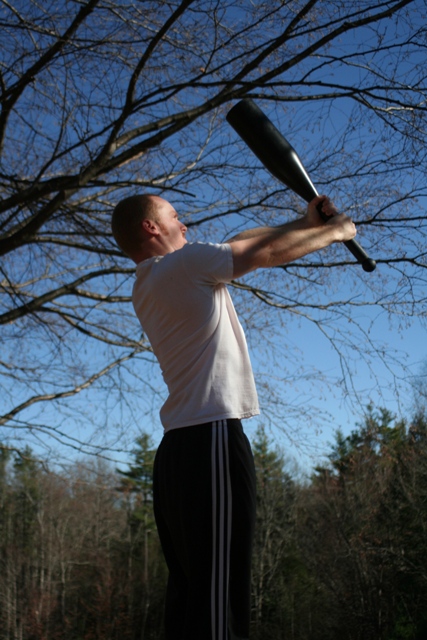
The clubbell is a club swinging tool that is primarily used for strength and conditioning, fitness training, and athletic performance enhancement. I’ve been using clubbells regularly since 2006, and it’s about time that I give this great piece of equipment the attention it deserves. I’ve seen what they’re capable of, and to tell you the truth, I’m very impressed.
Given that clubbells are not cheap, you should probably know the whole story before making your first purchase. I know what it’s like being a first-time buyer – you’re skeptical. I was too. Back when I first learned of clubbells, I was a fresh out-of-college, soon-to-be married personal trainer with very little disposable income. Every penny counted, and I wasn’t about to blow a bunch of money on a scam product that would collect dust in my home gym. I needed to know if it would be worth the investment BEFORE I spent my hard-earned cash.
The RMAX organization makes some bold claims concerning the clubbell. Truth be told, I think some of them are way over the top, but that doesn’t mean I would discourage anyone from looking into purchasing a clubbell. It’s just important to educate yourself and understand the TRUE advantages, disadvantages, and proper applications before you pull out that credit card.
This review is meant to help you in two ways: 1) learn all about the clubbell training tool itself, and, 2) decide if it’s right for your situation. I’d also like to offer you a free gift if you do decide to invest in the clubbell.
Clubbell Review Components:
1) Learn all about the Clubbell equipment itself in the Product Review (videos): This is where you’ll get all of your product-related questions answered, including detailed information about what the clubbell is, what it’s made of, quality and design considerations, what makes it unique, and who the clubbell is best suited for (and not best suited for).
2) Determine if the Clubbell is the right training tool for you: This section will deal specifically with who can benefit from the clubbell, and who cannot. If you’re trying to make up your mind about whether the clubbell is right for YOU and your circumstances, then this section will provide you with the answers you need.
You’re about to get an inside look at what clubbells are REALLY all about. This is a long product review, as I wanted to err on the thorough side and try to cover everything. So, let’s take a detailed look at the clubbell, the world’s best club swinging tool.
Clubbell Product Review
The clubbell combines modern engineering technology with ancient principles of strength training to create an effective tool for health-first, multi-planar strength training (that’s fancy speak for “three-dimensional strength in real life”).
The advantage that the clubbell has over other weight swinging tools is in its innovation and design standards. Simply put, the clubbell has a far superior design and higher quality standards over other weight swinging tools.
The primary advantage that the clubbell has over other strength training tools is its multi-dimensional training nature, and that it can be used to improve the conditioning of a broad range of movements, instead of just muscle groups. This is not just another feature or highlight to throw in with the rest – this has major implications! We live, work, and play in three dimensions, and our training should reflect and enhance this. We are not creatures of isolation, but creatures of integration. The clubbell teaches you to integrate your body with complex movement chains that are directly applicable to real world needs. This is exactly why I have incorporated it into my training programs. The clubbell teaches you how to apply whole-body strength through a broad range of highly technical, athletic movements.
It should also be noted that with the clubbell, you can strengthen full ranges of motion, not just partial-range, limited movements (like most pushing, pulling, and twisting exercises). Not only that, but the clubbell can be very light and yet still produce significant adaptive training effects through the use of momentum. With other weight lifting tools, you’ll need a heavier implement which places unnecessary strain on the joints and connective tissues, slowly eroding them over time. Instead, the clubbell strengthens your joints through traction and shock absorption.
You’re going to learn a lot about these unique advantages and more during the “Pros and Cons” section of the product review videos. First, let’s take a look at the clubbell equipment itself…
The Complete Clubbell Product Review (Part 1)
The Complete Clubbell Product Review (Part 2)
TACFIT Clubbells vs CST Clubbells – Complete Product Review (the short version is this: Don’t buy TACFIT Clubbells. Buy CST Clubbells!)
Note: You can Click Here to view a photo of the difference between the CST and TACFIT clubbell grips. And you can Click Here to view a photo of the wear on some of my CST clubbell grips (after approximately 7 years of regular use).
Clubbell Benefits to the User
You probably noticed a common theme in the review videos: versatility. I frequently mentioned that the clubbell has a very broad application and can be used for a variety of purposes. When you boil it down to its very essence, the clubbell is just an awkward, heavy object that is best used for strength training. That said, almost any goal that can be accomplished through strength training can also be accomplished with a clubbell.
There are over 140 different traditional clubbell exercises taught in the Encyclopedia of Clubbell Training. These are just the basic palette of clubbell exercises, and this covers all three planes of movement (sagittal, frontal, and transverse), and all six degrees of freedom (moving up/down, left/right, forwards/backwards, bending up/down, twisting left/right, and tilting left/right). Those 140 exercises serve as a springboard for creating combination routines and even brand new exercises, unlocking literally thousands of movement/exercise possibilities. You can use the clubbell for: straight sets, supersets, circuit sets, drop sets, pyramid training, grease-the-groove training, high intensity interval training (HIIT), high-density training, escalated-density training, combo training, hybrid training, movement-skill training, endurance training, strength-endurance training, max-strength training, and so much more. Again, the clubbell is just a tool, and you decide how you’ll use it based on your goals.
So, it should go without saying that the clubbell can serve a broad range of purposes and training goals, such as:
- Fat loss – The clubbell can be used to lose bodyfat, trim up your waist, and reveal your abs because most clubbell workouts naturally increase the strength of your metabolism and burn fat for hours after you’ve finished exercising. The clubbell is so well-suited for fat loss, that most users notice a decrease in bodyfat even when pursuing other goals.
- Muscle building – The clubbell can be used for systemic hypertrophy (building functional muscle all throughout the body). It won’t help you look like a bodybuilder, but you can build an imposing “hard-body” muscular physique – even in places you didn’t know you had muscles.
- Whole body, systemic strength and power development through full ranges of motion in sophisticated movements.
- Other fitness attribute development such as strength, endurance, power, coordination, balance, agility, etc.
- Improved joint mobility and stability, muscle flexibility, and connective tissue strength – reducing the risk of injury through pre-habilitation (aka concentrated injury prevention).
- Athletic performance enhancement for a broad range of sports and recreational activities.
- Improved grip strength, which is a proven marker for longevity.
- Improved posture during static (ie standing, sitting) and dynamic physical activity (ie running, jumping, lifting, throwing, etc.) through the 7 Key Components of Structure.
Those are the major areas of benefit. Obviously, all of the other benefits of exercise will also come along with clubbell use: higher energy levels, increased bone density, lower blood pressure and blood cholesterol numbers, improved cardiac and respiratory function, stronger metabolism, etc.
Why I Don’t Recommend These Other Similar Tools
So, now you know why I fully endorse and recommend the clubbell. Let me share with you some specific reasons why I do NOT recommend other similar tools…
- Indian Clubs – The smaller ones, though easier to maneuver around the body, are too light to create a substantial adaptive training effect for the whole body. The larger Indian clubs, though traditional, are too bulky to swing around the body during most exercises, and thus, have a very limited margin of use.
- Macebells – The macebell excels in a handful of exercises, but they are too long for versatile use, and thus, have a very limited exercise selection.
- Sledgehammers – These were never designed with exercise in mind. The awkward weight distribution of the sledgehammer makes swinging them difficult and limited to only the simplest movements (ie leverage holds and woodchoppers onto a tractor tire).
- Homemade concrete clubs and Plate-loaded versions – These are too risky to the user and surroundings, and encourage fear-reactivity during normal use. The chance of injury increases dramatically upon impact with one of these tools.
- Sand-filled or water-filled plastic and/or other bats – These are unstable tools that shift when lifted or swung, and can cause injury to user in the form of torn, strained, or pulled muscles, or even joint problems. Instability is a good quality in some training tools, but not when club swinging. Even in tightly packed tools, the weight distribution is usually unbalanced, awkward to handle, and creates unnecessary strain in the joints.
With the clubbell, you get a compact, safe tool that was designed specifically for exercise. That’s why I recommend you only invest in authentic clubbells.
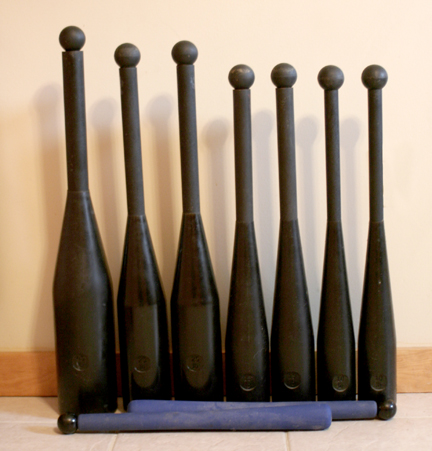
John’s Advice to Prospective Buyers
I’m not a spender. I’m a penny-pincher. I don’t spend money without thoroughly evaluating a product for myself (especially when it’s expensive). I had to personally use a friends’ clubbell for months before I even bought my own. My first purchase was a pair of mini-clubbells that I spent a year using before I was fully convinced that it would be worth the investment to upgrade. It took me over 3 years to outfit my clubbell home gym because I only buy what I need and what I’ll use (and what I can afford!).
That said, clubbells have been one of the best investments in training equipment I’ve ever made. Even four years later, they have not grown old and I still use them for most of my strength and conditioning goals almost year round. Few of my training tools have received so much use.
If you’re looking for a quality club swinging tool, then I highly recommend you invest in the clubbell.
What Clubbell Weight Should I Start With?
Use the following guidelines to choose the most appropriate starting weight.
Poor Fitness Level – No training experience, recent rehabilitation from injuries, small build
Men – Pair of 10 lb clubbells, and/or a single 20 lb clubbell
Women – Pair of 5 lb clubbells, and/or a single 15 lb clubbell
Average Fitness Level – Some training experience, healthy, moderate build
Men – Pair of 15 lb clubbells, and/or a single 25 or 35 lb clubbell
Women – Pair of 10 lb clubbells, and/or a single 20 or 25 lb clubbell
Excellent Fitness Level – High training experience, healthy, large build, athletic background
Men – Pair of 20 or 25 lb clubbells, and/or a single 35 or 45 lb clubbell
Women – Pair of 15 lb clubbells, and/or a single 25 or 35 lb clubbell
Note: Most men start with a pair of 15’s and women start with a pair of 10’s. These are clubbell weights that most trainees will not outgrow – even after years of use. If you’re still undecided, then choosing the lower weight is usually the best option.
Click here to claim your FREE gift when you order Clubbells
*If you order through my referral link, please send me a copy of your receipt and I’ll send you a free gift: The 7 Key Components of the Clubbell Front Swing (24 minute coaching video). Just forward your confirmation email containing your receipt to physical (dot) living [at] gmail (dot) com and I’ll reply with your gift. Thank you for supporting PhysicalLiving.com!
If you found this article helpful, please share it with your friends and tweeps:
ShareTweet
.jpg "John Sifferman")

CST, CST-KS, NSCA-CPT
Health-First Fitness Coach
Certified Clubbell Instructor
Learn How To Use Those Clubbells
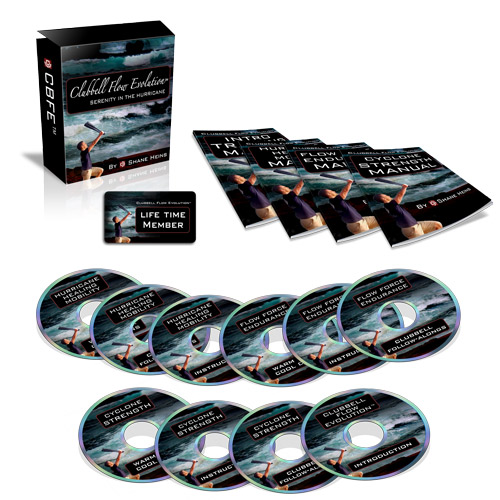
If you’re wondering how you’re going to learn how to swing those clubbells, and which educational resource is the best one, take it from someone who owns and has used them all. I’ve reviewed every single clubbell training product ever released, and I’ve come to the conclusion that Shane Heins’ Clubbell Flow Evolution program is hands-down the best clubbell instructional material there is, and by far the best value out of everything currently available.
This is a must-have for anyone who is thinking about getting into clubbell training – whether for casual recreation or serious training. It’s the go-to program – actually 3 programs in 1 product – and I stand behind it 100%. Learn more about it in my complete product review here: Clubbell Flow Evolution.

Hi John,
thanks for taking the time to give us such a comprehensive Clubbell review. :-)
Regarding Indian Clubs: I tried high quality wooden Indian Clubs. My coach trains physiotherapists in Indian Club Swinging for rehab and coordination improvemment. In my opinion (I am not an expert, only a trainee at beginner’s level)they are a very good complementary tool to the RMax Clubs: For rehab, for very deconditioned individuals, for improving coordination. Very demanding training. Obviously not for strength & conditioning but for movement sophistication and adressing suboptimal movement patterns.
It helps me to practice Clubbell exercises without fear reactivity because bad coordination, muscle imbalances, lack of mobility can be adressed before swinging serious heavy stuff. Not for the simple stuff like swings but if I do 15 lbs clubbell mills with bad movement patterns (SMA and what not), I may get punished. With a 3 or 5 lbs Indian Club I can practice skill, release muscle/fascia adhesions and improve movement patterns without risk of injury.
PT Gray Cook’s approach is: first correct movement patterns, then do the heavy S&C training. If you don’t, you won’t stay long in the NFL or whatever is your game.
Gray Cook’s experiences:
http://www.youtube.com/watch?v=75-c_xYHZHQ
So I think Indian Clubs have a place in the world of Physical Living.
Hi Andrea, Yes, all tools have a best purpose and clear benefits, and I’m personally a fan of the Indian club for shoulder rehabilitation purposes (under the direction of a qualified PT). But regarding weight swinging tools for strength training, the clubbell is far superior. Maybe someday I’ll review some authentic Indian clubs, too.
Hi John,
Thanks for the great and comprehensive review – good work – I’m going to see your videos later when get back home, where the internet connection is more proper.
@Andrea: I’m physiotherapist and use clubbells to many of my clients – starting with 5lb to get movement in and bit by bit more heavy clubbells when movement pattern is learned and pain allows.
Henri
Physiotherapist
CST
IKSA/IUKL Kettlebell National club instructor
My pleasure, Henri.
Great work with videos!! – indeed!! Funny to think to whom has most benefits with clubbell-training? I think all of us, because there are no-other equipment which you got so much benefits in so tight package!
I normally teach people to use bodyweight-exercises first – then kettlebells and finally clubbells – why I do that?
1. For to learn to be functional, we don’t need extra equipments – just our body. Easiest to carry on ;-) and start with
2. In my experience: kettlebell (KB) is easier to learn at the beginning than clubbell (CB) – and that’s because of mass of gravity. KB is easier to handle.
3. When you manage to handle KB, you are ready to finalphase – THE CLUBBELL!!
Of course we all are different and some people want to start with CB at once or never. This is how I work in generally.
Well, i really like all the advantages of clubbel.
But I’m removing all the chances from get hurted working out, after 2 knee surgeries, one to reconstruct a torn ACL and the other was a meniscectomy, 15 days ago. And all that clubell swings makes me crazy! Imagine an 10 lbs clubell swinging to my knee!
That’s a crazy worry or I can hurt yourself really bad with it? Anyone knows someone that get hurt?
THanks!
I’m the newest fan of your website! Really good!
Hi Alexandre,
Yes, there is definitely some risk with clubbell use, as with any form of exercise. Used improperly, they can, in fact, be very dangerous. That’s why all of the instructional materials come with safety precautions and usage suggestions to minimize the risk.
To give you some perspective on the risk of impact…
I’ve been using clubbells almost year round since 2006. I’ve probably had 8-10 “accidents” where the clubbell has hit me – 2 or 3 times in the head while doing mills, and the rest were usually grazing my kneecaps from the sides during hammer swings or similar. In ALL cases, it was either a situation where I was extremely fatigued or I simply wasn’t paying attention to what I was doing (just going through the motions, and not being mindful). With the exception of a small bruise to my head, the impacts have never resulted in an injury.
That said, 99.9% of the time, you can avoid impact from exercising caution when progressing, and in being mindful (clubbells FORCE you to be mindful and focus 100% on what you’re doing). It’s that .1% of the time that you’ll thank Sonnon for the rubber exterior.
It’ll be awhile before you’re cleared by your doctor for exercise, so you’ve got some time to think it over. Once you’ve got clearance, the clubbell would be a great tool for strengthening those knees after your rehabilitation.
Thanks! (a little late, but better than never!)
I’ll talk to my doctor about it to strengthening the knees!
Thanks for the thorough review, John. I’ve been a bit unsure about whether I should invest in some clubbells for a while now but I finally took the dive today and ordered a pair of 10lb clubbells. Can’t wait to get started with them — they look like great fun! :)
You’re going to love them, Victoria!
Finally received them! John, do you have any opinion on “The Clubbell Training Black Book“? I’m thinking that it might be a good investment to make some time in the future. Also, if I wanted to implement clubbells into my training as simply as possible with minimal hassle, do you think it would be a good idea to practice the Mill, Swipe and Hammer Swing and work my way up to completing the Trial by Fire?
I haven’t reviewed the Black Book actually. I know both Adam Steer and Ryan Murdock pretty well, though, and they would only put out a good product.
Those three exercises complement each other very well, moving through all 6 degrees of freedom, and the TBF is a great benchmark to work up to. So, if you can do so with excellent technique and minimal discomfort, then I think that’s a good plan. If not, drop down a bit, and practice some less sophisticated exercises to groove the 7 Key Components (ie front swings, side pendulums, side semi’s).
Enjoy!
Dear John,
Sounds great, but how does one learn to use a Clubbell?
Apart from hiring a clubbell coach, there are a couple options…
The Encyclopedia of Clubbell Training is the most comprehensive educational resource currently available and will give you a fairly exhaustive overview of most of what clubbell training has to offer. Also see the Big Book of Clubbell Training and the accompanying DVD program if the Encyclopedia is a bit too much all at once.
I should also mention Shane Heins Clubbell Mass Evolution, which is a superb instructional product for those who are looking to build lean muscle mass.
You made me order some club bells in, I didn’t realize how many variations in training the club bell had too offer up until I read this review. Good job, john.
Glad to hear it Robyn!
Hi John,
This is good stuff. I’ve been researching clubbells for some time now. I always seem to find my way to Physicalliving.com. Your website is a staple for me. Thanks for the unbiased and objective information. Keep it coming.
I appreciate the kind words, Daniel – thanks for reading.
I realize this thread isn’t recent but here goes my clubbell question:
I’ve been doing circular strength training for about 6 months (intu-flow, flowfit and BER) and am really interested in clubbells. I started with CST due to shoulder problems from traditional functional strength training and have gotten great results so far, no 100 %, but 85% say. My question that I haven’t been able to google-Fu successfully is will someone get the results of clubbell training starting 2 handed with a 25 versus the 15’s. Basically it’s cheaper and I can afford to start there now, or wait longer to start with 15’s later.Thanks for a great site and resource.
Mike,
You can get a lot of mileage out of a single 25 lb clubbell. You won’t have quite the diversity of exercises with single clubbell training, but there’s more than enough to work with. That said, if you’re approaching this decision from a shoulder rehab perspective, then one option is to start with a much smaller clubbell instead. I started with a pair of 5 lb mini-clubbells myself – used them for a year before finally upgrading to 15’s. One more idea is some people will buy a single 15 lber, and then buy another one down the road to make a pair. It all depends on your priorities. Let me know if there’s any other way I can help you further, and thanks for reading!
Hi John,
Good video reviews of the ClubBell- your site is actually better than Sonnen’s and provides more info.
I do a lot of kettlebell work along with Functional Training workouts (following Coach Dos Remedios MHPT and CST programs)
I came across your video on Club Bells and was intrigued. I’m thinking if I buy some I need to get 2 x 15 lbs and 1 x 35Lb plus the encyclopedia so I can figure out how to use them.
But…that’s a lot of cash for a product I never tried. What do you recommend for a starter kit? My goal is to incorporate Club Bells into my kettlebell and weight training programs for variety. My primary interest in total body conditioning.
Hi Steve,
Thanks for the kind words.
A pair of 15’s, a single 35, and the Encyclopedia would be an ideal all-around starter kit. I like the potential of having both a pair of lighter weights and a heavier single from the start, but your budget determines what you can afford.
A pair of 15’s will get you more total mileage than a single 35, and will help give you a taste of what clubbell training has to offer. So, I’d recommend a pair of 15’s first, along with some form of instructional material that intrigues you. The Encyclopedia is the most exhaustive, but there are other options that less expensive and still provide plenty of training material (ie Big Book of Clubbell Training, Clubbell Training For Circular Strength DVD, etc.).
That said, there are a LOT of free online instructional tutorials that are excellent, if you’re willing to look for them. I’ve seen great clubbell tutorials from Scott Sonnon, Adam Steer, Shane Heins, and others over the years. They’re out there if you’re patient enough to search for them. That might be reason enough to also invest in a heavier clubbell instead of a more expensive instructional program. It all depends on your preferences.
Let me know if you have any other questions. I’d be happy to help!
John,
This is a post for those thinking about buying clubbells who’ve never tried them.
Based on your recommendations and our email exchange, I ordered my clubbells and the Big Book of CB Training on Jan 1st and they arrived today (Jan 6th). It was a pleasant surprise since I didn’t really expect them for another week based on the site’s shipping FAQ.
The 15lb pair are pretty challenging – my choked up grip slips quite easily and right now I cannot imagine doing single hand swipes or casts with this weight. These feel HEAVY. The 35lb one is…well…sitting off in the corner for future use.
I would describe myself as moderately athletic and strong from free weight training and kettlebell lifting– I swing a 70lb KB with two hands for reps, a 44 for reps with 1 hand and can snatch a 53lb KB. But a 15lb clubbell snatch??? Not happening out of the box- the club would slip out and be embedded in my wall (or my head). If I purchased again, I might start with the 10s.
I start tomorrow with some single and two handed swing training. I plan to use Clubbells for metabolic conditioning and to complement my strength training. Having scanned the Big Book, I can see I’ll have many, many variations of exercises to choose from.
I’ll send periodic progress updates.
PS. I purchased from John’s affiliate link and he sent me a Swing tutorial video that is absolutely fantastic. I recommend you do the same if you decide to buy.
Hi Steve,
Thanks for the kind words. I’m glad you liked the video. And wow, that was fast delivery!
you wrote:
“These feel HEAVY…If I purchased again, I might start with the 10s.”
I understand what you’re saying 100%, but I bet if you give it a few weeks, you won’t regret your decision. The 10’s would certainly be an easier transitional weight, but you would likely outgrow them in a matter of weeks. The 15’s will be a good weight indefinitely – you’ll never outgrow them.
What you’re experiencing is “new clubbell trainee syndrome” :)
They should and will feel exceptionally heavy because you’re not used to such an extreme leverage disadvantage. I imagine that your forearm muscles start screaming much sooner than you’d like. The good news is that if you work incrementally, I’m sure you’ll see some rapid initial gains in strength, especially grip strength, which is usually a beginner’s limiting factor.
In the mean time, you can try some vibration drills – shaking your body, and especially your arms and hands out in between each set. This will help flush out any toxic by-products that accumulate with fatigue. You’ll also want to make use of Intu-flow joint mobility and Prasara yoga to help you maximize your preparation and recovery. I’m not sure if you own any of those resources, but there are free tutorials available online if you search for them.
Enjoy!
I was shocked to find how much weaker my left arm was in circular strength training than my right arm! Using any other weight training device and system I never, in almost 20 years of lifting had a moment where I thought “wow! my left arm is weak!”. But clubs found weakness instantly, using 15’s. What do i do? Drop to 10s? 5s?? I’ve never been injured, it feels so weird. I do have 2lb wood Indian clubs and they aren’t an issue.
Nick, If it’s not an injury or mobility issue, and it’s strictly a strength deficit, then yes, the only option is to either a) choke up on the clubbell grip to decrease the leverage challenge, or b) use lighter clubbells. Good luck!
John, choking up helped a lot and allowed me to perform many of the 2 club sets with the 15’s. Ultimately though I had to buy a 10lb club for wrist casts and shoulder casts and mills with one hand. These are so deceptively heavy it isn’t funny. I’ve been lifting all my life. I said before and I’ll say it again, it’s like starting over.
I did also recently pick up “tacfit commando” and Sonnon’s flow yoga material. He’s all around the best fit instructor I’ve seen on retail media. No club coaches near me, sucks.
Clubbell update- a year later
After using my clubbells for a year, here are some results:
1. I added a 20 and 25 lb clubbell.
2. I can do many more exercises with the 35lb clubbell that I could barely hold onto when I got it a year ago. These include overhead swings, giant side circles, side swings, front swings, presses and more.
3. My core strength has become…phenomenal. I never had this before.
4. Grip strength has vastly increased.
5. Hips, legs, back, shoulders all stronger with increased mobility and endurance.
6. I could buy a few more clubbells to have matched sets, but I haven’t found this necessary other than my starter pair of 15s.. I do a number of asymmetrical exercises such as swings holding a 20 and 25 clubbell plus a few different single hand exercises.
I still visit this site periodically for updates and have added 30 minutes of daily mobility drills based on John’s advice and his interview with Scott Sonnen (I bought the IntuFlow book for direction on this). I consider the mobility drills as a warm up and believe it has increased my mobility and have helped with injury prevention.
For me, the clubbell purchase was worth it. I use them several times a week and they’ve helped my body to work as a complete unit.
In my home gym, which I now consider ideal I have: Olympic weight set, power rack and bench, pullup bar and rings, kettlebells, clubbells, some rubber tubing, a medicine ball, some heavy rope and a homemade dragging sled. Life is good.
Thanks again John for the guidance and inspiration.
Hi
I am thinking of investing in some clubbells and wanted to know do they bulk your upper body up. I don’t want to end up with huge forearms! I really want to strengthen my arms and upper body if I used the mini clubbell 5kg would that still be of benefit.
Thanks
Hi Lydia,
The short answer is that, no, clubbell training will not make you bulk up. It would take a very concentrated effort, along with a tailored nutritional program to even create a possibility for that – not to mention some powerful drugs. I’m very confident telling you that there’s nothing to worry about, and I would highly encourage you to take up clubbell training if it interests you. Don’t let an unfounded fear hold you up…
F alse
E vidence
A ppearing
R eal
This question has come up frequently, so I’ll provide a deeper explanation in a future Q+A article.
Absolutely correct John – very few women are able to build large muscle mass – certainly without deliberately trying – and doing so hard.
The high leverage and fluid movement for clubbell training make them very suitable for targetting low mass strength growth – used correctly they will build the small muscles and encourage the techniques that will help a person develop strength and lift safely.
Bottom line is if you don’t want to get too bulky – don’t lift very heavy weights don’t load your diet and you won’t, even if wish to and do you do I’d cite the example of a young woman I did some personal training for a few years back – her friends teased her for the beautiful muscle shape she developed in her arms – and then all promptly joined gyms.
Exactly, Ed. It’s really a non-issue. Clubbells are great for building full-body strength, and women are highly unlikely to bulk up – from ANY strength training and especially clubbell training. For those interested, see here for more info:
Why Women Don’t Bulk Up From Strength Training
https://physicalliving.com/strength-training-for-women-why-women-dont-bulk-up-from-strength-training/
I will never get it – this weird fear of “bulking up” in some women. Women can’t get huge muscles like men because they just have not enough testosterone. I can do the hardest weight training and I will get strong but I will never look like Randy Couture or Silvester Stallone. Not gonna happen. Without medication, doping etc my muscles will get as big as their are supposed to be – genetically. Not more.
The problem is that most “slim” women look pityfully anorectic (atrophied muscles aka skinny fat) because they don’t use their muscles. “Normal” woman in our sick society are either skinny fat or obese. I always avoid being “normal”, because healthy, intelligent, strong people are not “normal” in US and Western Europe.
Hi,
I’m sure you know your stuff, and congratulations on managing to talk for that length of time on camera – that is more than I could have done!
I can see that you are passionate about this product, but I am not convinced.
The nature of my work involves to name just a few: wielding a chainsaw at all levels and angles, splitting logs with an axe/splitter, cutting wood with a bow saw, digging with a bar, pick, mattock, spade and shovel, breaking rocks with a sledgehammer, rope access drilling work – working from a rope/harness, tree climbing, plastering, dry stone walling, etc…
My work is physical and demanding, and luckily I enjoy most of it!
In my spare time I frequently weight train, some bodybuilding – but for personal gain not competition. I am proud to say I am all natural (drug free) and am proud of my core strength and really strong grip – I can shoulder shrug 250 kg’s on a 2 inch bar for 3 x 15 reps without wrist straps – just grip. I’m not a show off, I train to keep my mind and body focused and active.
I have tried to use kettlebells, but have not found them to be any different than a lot of what I do at work (Try holding an 8kg back handle chainsaw at arms length all day and you’ll know what I mean! ;) ), and therefore no benefit to my training regime.
I often ‘Challenge’ workmates to a duel – be it lifting a sledgehammer slowly through the full range of motion of your wrist, with arm extended, or pushing a wheelbarrow half loaded with one hand!
And I’ve long been looking for a training aid that would complement my routines, and improve my core strength as well as wrist and grip strength.
Unfortunately, I feel disappointed with the review of your product – I felt you concentrated too much on such insignificances such as the benefit of having rubber coating? I mean come on, are you just trying to make the video as long as possible? Rubberised, padded, I get it – move on. I have to admit – and I hate to sound insulting here, but I lost interest completely.
Granted, not everbody works in the same line of work as me, and so may well feel the benefits of this product, and for them I am pleased. Do they make altered versions? Perhaps a thicker grip for increased grip strength? Or longer and more top heavy perhaps?
As a final note – you do look very good at using the clubbell, so please accept this as a compliment – and positive criticism not negative. :)
Hi Pat,
Thanks for your message and the kind words. I can relate with you, having spent nearly a decade as a landscaper – even owning my own business. Almost everything we did was labor-intensive, but the stone walls and ponds were among the most physically challenging. I still remember installing 3 retaining walls at a local school. The first one was 24 feet high, and 130 feet long. We were using 91-pound pre-cut concrete pavers. 91 lbs is nothing for the first few hundred blocks (repetitions of deadlift from pallette, carry to wall, shimmy into place). But around 2-3pm in the sun, they start getting heavy :-)
I’ve always had an appreciation for this quote:
“Why do strong arms fatigue themselves with frivolous dumbbells? To dig a vineyard is worthier exercise for men.” -Marcus Valerius
To answer your question – the heavier clubbells have thicker grips (the heavier the CB, the thicker the grip) and they are longer – and there are ultra-heavy versions. Even the 45 lb clubbells will be enough of a challenge for the strongest of men. Remember, the force production is based on leverage disadvantage AND compounded by momentum from swinging. So, even a light weight can produce a huge amount of force. In other words, the 45 pounder can be swung to create the equivalent of hundreds of pounds of force.
However, if that’s not enough, there is the 80 lb “challenge” clubbell, and I may have even seen some heavier ones, too. You should probably know that while I’ve seen a few people perform feats of strength with the 80 (ie only simple exercises such as the two-handed power clean to “order” position), I don’t know of anyone who uses one regularly in their training. It’s just too heavy, even for the strongest strongmen.
To clarify though, they aren’t merely a grip strength tool, but a tool for integrating full body strength – something you have to do naturally in your line of work. The clubbell could help you refine this and integrate your wrist and grip strength with your core strength in many different movements.
My suggestion: buy a 45 lb clubbell to get a taste for weight swinging. Or, just move on and keep doing what you enjoy. I love clubbell training, and think you would be missing out, but probably not that much. Even though they are an excellent tool for a variety of purposes, they’re still not for everyone.
Thanks again, and let me know if you have any further questions.
Ouch… the shipping costs are pretty painful…! Isn’t there any other option?
Jerry,
Sometimes clubbells pop up on ebay, but shipping costs will always be high for heavier packages, especially with rising fuel costs. The homemade versions can be an affordable option, but there are some definite drawbacks as I noted in the review.
It’s not as bad as it could be though. The price of clubbells has actually come down quite a bit since I bought my first set. They used to be a lot more expensive than they are now.
John,
Regarding the broken bolt on one of your clubbells: an “easy-out” is probably what you need to remove the stud from the end of the clubbell.
http://www.amazon.com/gp/search/ref=sr_nr_i_1?rh=k%3Aeasy+out%2Ci%3Aindustrial&keywords=easy+out&ie=UTF8&qid=1307228006
Maybe I even have one the right size already! Bring my grandson and the broken clubbell over and we’ll see if we can get that stud out.
Love,
Dad
Thanks. Will do, Dad.
Hi John
Just a quick question!
I’ve found somewhere to buy some clubbells in the uk but they only stock 6kg and 8kg pairs, I know you recommend a set of 15 lbs to start so which one to go for?
Planning on using them for mass evolution having just done tacfit warrior for 8 weeks.
Thanks in advance
Hard to say, Rob. If you have extensive strength training experience then I’d lean towards the 8kg, otherwise stick with the 6kg (especially if you haven’t used clubbells before).
Hey John,
I bought KettleBells through your affiliate link, and sadly haven’t given them much use. I’m thinking of getting a pair of ClubBells now (hoping they prove to be more fun). Shane Heins recommends starting with 10lbs. Do you agree with that for a man? I weight 185lbs, ride a mountain bikes, but don’t do much else. (Heck I even bought the pullup bar through your affiliate line too.) I’ve been doing pullups, but can only do about 3 at a time. So 10lbs or 15lbs pairs for me?
If money isn’t an issue, then go ahead and get the 10’s first. That would be ideal, and will help you ease into the transition to weight swinging. I started with a pair of 5 lb mini-clubbells and used them for a year before upgrading to 10’s and 15’s. That said, a pair of 15’s is probably the best investment you could make for long-term training. They will definitely be challenging in the beginning, but after a few weeks, they should feel manageable. And you’ll never truly outgrow a pair of 15’s.
P.S. Thanks for the support, John. It keeps this website going!
P.P.S. If you’re looking for fun ways to use the kettlebells (I get bored with the traditional lifts, too, sometimes), then take a look at this KB workout I did not too long ago:
https://physicalliving.com/14-minutes-of-continuous-kettlebell-practice/
You can also look into Sonnon’s TACFIT Kettlebell program. I didn’t review it here, but have used the program myself – good stuff, and definitely unconventional as far as kettlebell training goes.
Hey John,
Ordered through you, and sent you my receipt. Unfortunately I have not heard back from you for a while. I fear you just haven’t gotten it, and I was hoping to get your article since I have already received my clubbells.
Thanks,
John
Finally got in contact with you, and got the video with the tips. Thanks for that. Time for me to get to work! (I feel like I have a long way to go)
Thanks for your patience, John. I think I’ve got my tech issues figured out now.
Hey John,
I wish I found this page sooner. I think I purchased a set of bogus 15lb clubbells on Amazon which were advertising Scott Sonan’s name. Once I got the clubs the features seemed completely wrong. I returned to the site to research further and found that they are Apollo brand clubs. Are these affiliated with Scott? I tried the emails at rmaxi intl but they’re shut down. The merchant is using his name to sell a full range of club weights.
I’m pretty bummed for my first pair of clubs, to say the least. Though they are 15 lbs, the similarities end there.
I’m sorry to hear that, Nick. I don’t think Apollo is associated with Sonnon, and they’re probably very different in design. I’ve seen a few knock-off versions over the years, and wouldn’t trust them myself. A lot of thought and testing went into the authentic clubbells, and I’ve found them to be a superior training product to any other weight swinging implement. That trust is enough for me. Worst case scenario, you can always return them (Amazon is usually pretty hassle-free), and invest in the real ones. Good luck!
I now have a real pair of 15lb clubs, what a difference. They’re longer, and so more of a challenge. The grip, coating, everything is top notch. Amazon is all over this other vendor now from my complaints. They’re real good about managing merchants, I hope this doesn’t happen to anyone else.
Yea I’m doing that. Scott needs to know they’re using his name though. That’s messed up. If you do a Amazon search for his name those clubs come up and they use his name in the title description, but in the body fine print they do disclose the clubs are Apollo. Dirty.
Excellent Presentation John. Few have done such a comprehensive introduction. I’ll refer!
Have to check out your 7 key components to the front swing sometime. Always always can learn more.
in strength, sweat, spirit,
Joe
hi john,
i have been asked what do i want for xmas and i remembered indian clubs. after researching, i believe they are too light. i then found club bells and subsequently this web page. i have been working with kettlebells for the last 4 yrs. on a good day, i can snatch 55 lb kbell 100 reps each arm. can you recommend what i should start with regarding club bells?
Hey Gino,
Most men start with a pair of 15’s, but if you’re feeling burly, a pair of 20’s might fit the bill. I usually recommend erring on the lighter side since clubbells are deceptively challenging – even the measly 15’s. I’ve known more than a few people who bought too big and regretted it.
My recommendation: a pair of 15’s as first priority, and then either a single 25 or 35 lb clubbell for two-handed training.
Been using these for only a month or so, but I’m very impressed – I’ve used conventional weights and kettlebells for a fair few years but find the clubbells the best all round training tool for hand strength I’ve used – better even than hand grippers the excellent powerball.
Glad to hear it, Ed. Keep up the good work!
Thanks for posting this review, it helped me decide on which ones to buy. As a beginner, I going to buy 2 15lbs CBs and go from there.
Aloha!
I am looking to get a pair of 15s but the website says they are out of stock… I am in a Middle Ages full contact sport and I think this workout would be perfect in increasing motion and forearm strength for me.
Great video. No macho hard sell. I have been using Indian clubs for a tennis warm-up. Great for loosening up the shoulder. I also use kettlebells in my training. I enjoy the athletic challenge these tools require and offer. My trainer just bought a set of club bells. I look forward to training with them. Looks like fun. Thanks. Please keep me posted.
Your presentation on Clubbells was well done. You appear to be quite a Clubbell enthusiast. I watched your two videos, and as said your presentation was outstanding. Unfortunately it was very biased and followed Scott Sonan’s questionable statements regarding Indian Clubs etc. Before I specifically comment on some of yours and Sonan’s erroneous statements here is my experience in physical training. I have trained with barbells, dumbbells, swingbells, and kettlebells for over 53 years. I have also been using British style Indian Clubs as well as heavy Persian and Indian Clubs for around 10 years. Also I have an undergraduate minor in physical education. That being said, I do not have a problem with the use of Clubbells as a training tool. My problem is the distortions of the facts relating to Clubbells.
Ok so here I go: The protective coating on Clubbell will minimize injury if you hit yourself with the club during training. This statement is not true. Given the same force of impact the resulting damage (injury) will be significantly the same. This is to say a 10 pound Clubbell, a 10 pound Wooden Indian or Persian Club, or a 10 pound steel club will result in a similar injury or damage.
You said the tether on the Clubbell is a safety feature preventing the club from flying into the air and damaging property or hitting another person. First, tethering any relatively heavy weight to your arm, wrist, and or hand is foolish at best. Assuming the tether works as intended you are looking at potential shoulder, elbow, and wrist damage if the club goes flying. Second, I have noticed most people who use Clubbell do not use the tethers.
Both you and Scott Sonar have stated or implied that the in effect the larger size of heavy wooden clubs have very limited use or are almost impossible to swing. Here is what you neglect to mention. There are basically two styles of clubs that are swung in more or less a circular motion. These styles are British Military Indian Clubs and Persian / Indian Clubs called Meels / Jori. British Style Clubs range in weight from a ¼ pound to upwards of 100 pounds. Generally the lighter clubs (under 7 pounds) are often swung simultaneously while the heavier clubs usually are swung with one hand and passed to the other hand to complete the movement. Meel(s) and Jori (s) are normally swung into the ready position and then swung alternately in a circular pattern. The circular movement patterns are similar for metal clubs (solid or loadable).
On one of Scott Sonar web pages he comments on the superiority Clubbells to wooden and other clubs. Since this post is somewhat lengthy I am not addressing his comment here, but I will be more than happy to respond to any of the statements. The link is: http://www.clubbell.tv/superior.php
To conclude I personally do not care for Clubbells, that does not make them a bad tool. But contrarily to the implications in your video that wooden clubs are inferior to Clubbell is simply not true. In fact from a physical training standpoint heavy wooden clubs are superior. It quite simply takes more grip, wrist, arm, and should strength to swing and control a heavy wooden meel or jori of the same weight as a Clubbell. If you question this statement try, shield cast your 24 inch long 15 pound Clubbells then shield cast a 31 inch 15 pounds meels or jori(s).
Hi Jack,
Thanks for your detailed comment and for your kind words. I’m glad you spoke up and shared your perspective, and although we disagree on a few points, we’re on the same team.
you wrote:
“Your presentation on Clubbells was well done. You appear to be quite a Clubbell enthusiast. I watched your two videos, and as said your presentation was outstanding. Unfortunately it was very biased and followed Scott Sonan’s questionable statements regarding Indian Clubs etc…”
If I am biased, it’s not for clubbells or Sonnon’s work specifically, it’s for finding and supporting the best solution to a particular problem. Regardless of who or what we’re discussing, I want what is best for my clients, my readers, and myself. Given that the clubbell fills a unique void in the fitness and strength and conditioning world like no other tool currently does, I am biased in that, it is currently the best tool that I’ve found to serve a specific set of needs that my clients, readers, and myself are facing. It is not because I’m attached to that tool or the training systems or people behind it – emotionally or otherwise. In the same breath, it could be argued that everyone is biased in some way or another – even if we strive not to be. So, this may be a moot point.
you wrote:
“Given the same force of impact the resulting damage (injury) will be significantly the same. This is to say a 10 pound Clubbell, a 10 pound Wooden Indian or Persian Club, or a 10 pound steel club will result in a similar injury or damage.”
But Jack, what about a 10 pound pool noodle?
All joking aside, I never took physics, but I completely disagree with that statement. Even if all three of those 10 lb tools were identical in dimensions (and thus, force production), which is extremely improbable due to their mass to weight ratio, that statement still wouldn’t be true.
Otherwise, why would one use a rubber mallet rather than a steel hammer, or vice versa? You use a rubber mallet because you want to impart less force than a steel hammer. Rubber will absorb more of the impact. Whereas, steel will impart more of the impact.
But that only concerns one type of impact injury (blunt force trauma). There are others that are possible with the many types of club swinging tools, and having a rubber coating helps to protect against those, too. Please also note that I never said it will eliminate the risk of injury – just reduce it.
you wrote:
“First, tethering any relatively heavy weight to your arm, wrist, and or hand is foolish at best. Assuming the tether works as intended you are looking at potential shoulder, elbow, and wrist damage if the club goes flying. Second, I have noticed most people who use Clubbell do not use the tethers.”
You’re right. I don’t use them, and most clubbell athletes don’t either. It’s a decision regarding the level of risk and danger present in your training environment. Assuming you are in a safe training environment (e.g. alone in a field), then I agree with you that using the lanyard is foolish. That said, if you are unskilled in the use of clubbell swinging and there are other people nearby who could be hit by a stray clubbell, then that is a high risk, high danger situation that probably warrants use of the tethered lanyard. If that was me, then personally, I’d rather risk an injury to myself rather than to others. It’s a judgment call, and there’s no absolutely right or wrong solution that applies to everyone and every situation. But I hear what you’re saying.
you wrote:
“Both you and Scott Sonar have stated or implied that the in effect the larger size of heavy wooden clubs have very limited use or are almost impossible to swing. Here is what you neglect to mention. There are basically two styles of clubs that are swung in more or less a circular motion. These styles are British Military Indian Clubs and Persian / Indian Clubs called Meels / Jori. British Style Clubs range in weight from a ¼ pound to upwards of 100 pounds. Generally the lighter clubs (under 7 pounds) are often swung simultaneously while the heavier clubs usually are swung with one hand and passed to the other hand to complete the movement. Meel(s) and Jori (s) are normally swung into the ready position and then swung alternately in a circular pattern. The circular movement patterns are similar for metal clubs (solid or loadable).”
Well, I never said they were impossible to swing. What I did say and still purport is that larger wooden clubs are less versatile than the more compact clubbell. It’s simple. The wider the girth is, the further away from your body you’ll have to swing it – resulting in less efficient, less effective, and ultimately suboptimal movement. Also, the longer it is, the fewer exercises you’ll be able to perform with it.
Clubbells can be very heavy and yet still much more compact than wooden clubs. That’s one of their biggest advantages as a piece of club swinging equipment. So, they can be lifted and swung in a larger variety of ways. Naturally, there are a lot of clubbell exercises that cannot be performed with other longer tools. For instance, your example of shield casting a 31″ meel or jori is no problem because the tool stays at waist level or higher, but that length prohibits any exercises where the arms are locked and the club swings down over the ground (rock-its, swings, pendulums, circles, swipes, etc.). With a 31″ long club, only those whom are super tall could perform those exercises without the club hitting the ground.
The excessive length prohibits dozens of the most rudimentary clubbell exercises. My point being that the the introduction of clubbells has opened up a whole new set of possibilities that didn’t exist in conventional club swinging before – in Britain, Persia, or anywhere else (as far as I know). It’s not just superior from an equipment standpoint. It’s opened up a brand new paradigm of club swinging. That said, I never said it was a perfect tool, and if it were up to me, there are design innovations I would be experimenting with to improve upon it.
you wrote:
“To conclude I personally do not care for Clubbells, that does not make them a bad tool. But contrarily to the implications in your video that wooden clubs are inferior to Clubbell is simply not true. In fact from a physical training standpoint heavy wooden clubs are superior. It quite simply takes more grip, wrist, arm, and should strength to swing and control a heavy wooden meel or jori of the same weight as a Clubbell. If you question this statement try, shield cast your 24 inch long 15 pound Clubbells then shield cast a 31 inch 15 pounds meels or jori(s).”
You are correct in that a longer tool of the same weight will produce a greater leverage disadvantage when gripped and more torque when swung, which will result in a more challenging exercise. That is true, but in the end, I think the benefits of the clubbell far outweigh the benefits of any other club swinging tool currently available. That doesn’t mean they’re right for everyone, and of course, everyone has a right to their opinion and preferences.
And in all seriousness, I’m glad you enjoy using your wooden clubs. I really am. To be fair, there are purposes for which traditional clubs are better suited, and they stand alone as a superb training tool. Nobody is questioning that. And no doubt, there’s a sense of pride and tradition and old time physical culture that comes with using them, and that shouldn’t go unmentioned. But for fitness purposes, strength and conditioning, among other things, the clubbell is a superior tool overall. And if and when I find something that better serves the needs of my clients, readers, and myself, I’ll be sure to let you know.
Thanks again for your comment, Jack. Keep swinging!
Best regards,
John
Certified Clubbell Geek
P.S. Truth be told, I’d love to try my hand at some truly heavy Indian clubs someday – see how my strength stacks up :-)
Hey John
After reviewing your club bells article, I have few questions. One where do I buy it from, and Two in terms of costs, will it be a significant if I only buy a single club instead of a pair? ( Im thinking ill just switch arms) Lastly, I think Im in between poor and average fitness level. So I not sure which club pounds to get, any suggestion? I just turn 30, thin ( but eat tones of food), I have greater lower body strength than my upper body. My goal is to obtain true functional strength for my upper body.
Hi Rian,
You can buy them direct from RMAX International. There’s a link at the end of the review posted above.
re: what weight to buy
That’s hard to say. Generally, if you’ve got it narrowed down to two sizes (e.g. either 10 or 15 lbs), then I usually recommend going with the lighter one. I spent a year working with the 5 lb mini-clubbells and don’t regret it. That said, even if you do go with the heavier one, you can always use it for two-handed training, which will help you build up your strength.
Hope this helps!
Hey there – great videos.
I suffer from shoulder instability and poorly functioning/bad positioned scapula on one side. (bad scapulohumeral rhthym)
Can you tell me if getting into Clubbells will be a good decision for Shoulder Rehab? Instability in particular?
And, in my case, would it be best to begin with light weight clubs?
Hope you can help
Jason
Jason,
I think clubbells could be a great way to help rehab your shoulder, but there’s no way for me to know for sure or to prescribe specifics. I’d discuss the idea with your medical team. Shoulder stability can be trained with any number of tools (or bodyweight exercise), but the clubbell really shines in this area. I haven’t found a better suited tool for this purpose.
If you go with them, definitely go on the lighter side. In fact, if I were you, I’d begin with the 3 or 5 pounders to see how your shoulder responds. I spent a year with the 5 lb mini-clubbells before upgrading to 10’s and 15’s, and it was well-worth the time invested.
Let me know if you have any further questions – happy to help. Best wishes on a full and speedy recovery!
John
Hey, thanks John.
Good advice. I will invest I a set of 2 pounders to begin with.
Based on what I said I specifically want to use them for, is there a specific Training DVD you’d reccomend?
(with rehab/stability in mind)
Jason
I haven’t reviewed it myself, but the first thing that comes to mind is Summer Huntington’s Clubbell Yoga book and DVD. If that doesn’t interest you, then the best choice, in my opinion, would be Shane Heins Clubbell Flow Evolution – starting with the Hurricane Healing mobility program, which is meant to be performed with light clubbells (ie 5 lbers).
Clubbell Flow Evolution
https://physicalliving.com/the-clubbell-flow-evolution-complete-review/
Either way, you’re in good hands. So, I’d get the one that most interests you. And you can always contact Summer and Shane to pick their brains about whether it would be a good fit for you.
Hey there John,
I understand you can’t offer professional medical advice, but do you think, based on what I’ve said in my previous post above (about shoulder instability etc) that I’ll have better success/results with Clubbells than I’ve had with Kettlebells?
Jason
I can’t say anything for sure about whether it will help or not, Jason. But what I can say is that the clubbell is a much more versatile training tool than the kettlebell and it can be used to train the shoulders in all three dimensions and all six degrees of freedom. The kettlebell can do this, too, but not as effectively as the clubbell due to its wider profile. So, if I had to choose one or the other for shoulder rehab, it would be the clubbell as this will be the superior tool that will better allow you to tap into deeper ranges of motion at the shoulder joints.
Hey John,
I recently started reading your reviews and have been interested in getting into kettlebell, indian club, and clubbell training. Perhaps even get certified.
Problem is, I’ve had several shoulder dislocations (approx. 60) and two surgeries (the most recent in 2009). I’ve got about 95% of my ROM back and I’m much stronger within that ROM. I was interested in the benefits of these different tools to aid in my shoulder’s strength and flexibility and wondered which particular tool(s) you recommend and why?
Hey HJ,
They are all excellent tools for improving shoulder health, function, and strength – and you could go a long way with any one of them.
Personally, I’d either start with some really light clubbells (3 or 5 lbers) or Indian clubs. I spent a year working with a pair of 5 lb mini clubbells and it was time and training well-spent. The kettlebell is another excellent tool, but it is not quite as versatile as a club/clubbell, especially when it comes to shoulder-specific exercises. There’s just a lot more options with clubs. I’m partial to the clubbell due to its design advantages and all the other reasons mentioned in my review. Although, some light Indian clubs would fit the bill just as well for most intents and purposes (at least initially). If money is an issue, just get what you can find/afford. Clubbells do go on sale from time to time, and I believe they’re actually on sale this week (through the weekend).
So, assuming you’ve been cleared for exercises (and clubbell training, etc.), if I were you, I’d begin by incorporating the light clubs/clubbells into your joint mobility practice (if possible), to see how your body responds to a little extra resistance throughout your shoulder ROM drills (e.g. doing clubbell arm circles in all basic ranges, etc.), and if that is A-OK, then begin by learning the basic clubbell exercises with an eye for shoulder stability/mobility. When working on full-range or deep-ROM exercises, you’ll usually find some kinks in your movement, which is why it’s a good idea to start with light clubbells. There is a huge variety of exercises, and I’d probably start you with some basic swings, casts, and presses to see how your shoulders hold up. If everything is a-ok, then you can always go heavier.
And when all else fails, just choose the tool that you think you’ll ENJOY using the most. That’s never a bad idea.
Let me know if you have any further questions – happy to help.
John
P.S. Check out my discussion with Jason to shed a little more insight on using clubbells in rehab/post-rehab (see comments above).
Hi John
Thank you for a great website:)
I have a question that I hope you can help me with. You started out with a pair of 5 lb clubbells right.
Can you do the same drills with the heavyer clubbells, or are they to tall/long.( not thinking about the weight here)
The reason I ask is that I want to use clubbells for flow training ( continued motion ). And if they are to long, that would be a problem I think?
Kind Regards
Tom
Tom,
The 5 lb MINI-clubbells are much shorter than all the other clubbells – even the black 5 lb clubbells. Generally speaking, the heavier the clubbells are, the longer they are, but not by too much. For instance, my 45 lber is about 2.5 inches longer than my 10s and 15s. Still, I haven’t had any problems with length, except one. With my 45 lber (the longest of the bunch), I need to choke up on the grip for two-handed exercises where the top/muzzle of the clubbell passes over the ground (e.g. two-handed front swings). I’m 5’8″ and if I don’t choke up on the grip, the clubbell will hit the ground during those movements. So, for the vast majority of exercises, I haven’t had any problems at all. Also, I’ve had a client at 5’1″ tall who had no problem with a 25 lber. When looking at heavy club swinging options, the clubbell is the most compact tool – including length. But whether it works for you will ultimately depend on your structure (ie height, arm length, etc.).
And by the way, if you’re looking to do flow training with clubbells, then have you checked out Shane Heins Clubbell Flow Evolution? That might be right up your alley.
Clubbell Flow Evolution Review
https://physicalliving.com/the-clubbell-flow-evolution-complete-review/
Any more questions – just let me know. Happy to help, Tom.
Hi John, thanks for your in depth review, and too bad what happened to you(r floor) thanks to the Tacfit Clubbell’s design flaw. I remember that grip was the gripe already with early adopters when you introduced them in your first post over a year ago. I quote:
Me:
The new coating is great, feels and grips like rubber, but doesn’t add bulk.
However, here’s the rub. More than the new coating, you will immediately feel that the steel of grip area has a rough cross-hatched texture (similar to what you find on some barbells). In some situations this will improve grip, in others it wont. I feel I have to rather grip harder with this design, and that the new coating would work better on a texture with more smooth surfaces.
The cheese-grater feel of the grip area needs some getting used to, I now have to remember to remove my wedding ring for training, because it does get scratched by the texture. So the perfect clubbell grip (for sweaty hands, and possibly including dog fur proofing) still needs to be invented.
Prescient John:
I would imagine a cross-hatched texture would be good for heavier, lower repetition work, but *might become a problem with high rep swinging*.
I could not agree with you more. Still seems the cross-hatch is an unreflected holdover from Barbells where the force is applied perpendicular. (As said before, I like the coating, as it provides good grip on smooth areas, so I guess an improved grip design would be largely smooth with annular groves along the shaft.)
Nevertheless I’m still happy using them, and I have yet to drop one (on second thought: no I don’t!!). With no CST clubbells available in Europe, Tacfit clubbells are the only game in town.
Those are some good observations, Winfried. Thanks for weighing in.
It’s true that the extra-rough grip is probably better for low-rep work – even if the TACFIT clubbell grip design isn’t adequate yet, but high-rep work would definitely require a more refined grip design, particularly because the pommel doesn’t assist in grip confirmation like it should. Annular grooves would be an interesting experiment.
Now, if you put the smoother crinkle-coat clubbell grip onto the TACFIT Clubbell design, I might be singing a different tune, and would probably be able to endorse the TF clubs. But I still wouldn’t be 100% satisfied. The pommel would still need to be changed, and I still have some qualms with the CST clubbell grip, too.
And now that I think about it, without the CST clubbell knobs at the base of the grip to help with grip confirmation, my performance would probably be severely diminished with those, too.
We’ll see. I’m going to keep using them either way.
Do you happen to know what the difference are between Clubbell Flow Evolution, and Clubbell Mass Evolution? (http://daretoevolve.tv/products/clubbell-mass-evolution/)
The main difference is that Clubbell Mass Evolution is geared towards muscle gain, and Clubbell Flow Evolution has three distinct programs for three different purposes. They’re both great programs, but in my opinion, Clubbell Flow Evolution is the better one – by far. In fact, I think it’s the best clubbell training program I’ve ever seen (and so far, I’ve seen and used them all).
I’ve got a lot of info on both programs at the links below.
Interview with Shane Heins about the Clubbell Flow Evolution
https://physicalliving.com/interview-with-shane-heins-about-the-clubbell-flow-evolution/
Interview with Shane Heins about the Clubbell Mass Evolution
https://physicalliving.com/interview-with-shane-heins-about-clubbell-training-for-building-muscle/
My Clubbell Flow Evolution Review
https://physicalliving.com/the-clubbell-flow-evolution-complete-review/
My Clubbell Mass Evolution Review
https://physicalliving.com/the-clubbell-mass-evolution-complete-review/
And there are even more resources if you check out the “Related Posts” section at the bottom of each article (e.g. sample workouts, among other things).
Any more questions, just let me know – happy to help.
John
Hi John,
Could you post a close-up of the handles for the CST and Tacfit club bells? I’m considering purchasing my first club bell and would like to have a better idea of the differences between the two.
Thanks!
You bet! Here you go: https://physicalliving.com/img/clubbell_review_grip_comparison_cst_clubbells_vs_tacfit_clubbells.jpg
Many thanks John!
Did you encounter anyone else complaining about the grip on the new TACFIT bells? Increased slippage seems like a major flaw to me but I haven’t encountered anyone else complaining about it. Have you spoken to Scott about it?
Only a few folks have mentioned it to me so far. But I know that RMAX is constantly changing their clubbell designs. And how they’re manufactured in Europe may be different than here in the USA. That review is a year old, too. So, they may have changed the design by now. And if my memory serves me, I did send Scott (and probably Nikolay, too) an email once my review went live. That’s one of the reasons I filmed it – to give them my feedback, too.
Hi John.
Thanks for all the information you share.
Have you tried gada training (long shaft with a weight at the end)? How different it is related to clubbells? Do you think it is more safe? See indian guys doing it on youtube.
Have you tried walking while swinging clubbles? I mean walk for 2-3 miles outdoors while holding and swinging the clubs (like marching with the clubs)? Is there any benefit doing this?
Hi Gregorio,
I’ve used a Gada a couple of times, but I definitely wasn’t as smooth with it as I am with my clubbells – need more practice. I don’t know how much safer it would be, but I know that clubbells are a much more versatile tool due to how compact they are relative to their weight and dimensions.
And I haven’t gone for a clubbell walk before (except with them in a backpack), but there was one time that we did hundreds of clubbell front rock-its in a row at a CST seminar. Does that count?
Thanks John. Yesterday i received a 6Kg clubbell. My first impression is that is fun (just doing a pair of easy exercises). I think instruction is needed for the more complex ones. Walking with a pair o 6kg would be too much, i think 2 Kg or so would be better. But i can do “endurance” farmer walks just holding the clubbell while walking. Also i tried to add a fat gripz to the handle. It seems to work well. Probably a globe gripz would also add variety to the grip. I also observed that with a bigger clubbell you can have a good massage for your trapezius if you hold it against your trapezius. Mine has a ball of steel at the end of the handle so i guess if it would be a good massage if someone holds and move the clubbell around your back (you are lying on the floor). The ball should be touching your back and little effort should be needed for your partner. I can imagine other uses for the thing but i won´t tell you, jaja. Thank you again.
Your reviews and info on the clubbells are great, John – very much appreciated. I ordered a pair of 15lbs to start with, and look forward to their arrival :-)
You’re gonna love them, Michael!
Thanks John – looking forward to receiving them. Also, after thinking about it overnight, I went back and ordered a pair of the 5 lb. Minis. They looked like they would be a good way to warm up into the larger ones, and help with shoulder mobility.
Good idea, Michael. After trying out a friend’s 10 lb clubbell – my first experience using them – I bought a pair of the 5 lb minis and spent about a year working with them until I upgraded. And I’m glad I did because it set a good foundation of proper technique. That said, I think having a little extra weight does make it easier to fine-tune some of the exercises. So, it’s good that you’ve got both weights from the start.
Sold; this is what I’ve been looking for for some time now. Are there any instructors in the San Francisco area you would recommend (particularly Marin County/North Bay)?
Matt Tripp at Move-SF.
Lots to learn on your website, thank you. Shane Heins’ Clubbell Flow Evolution program looks like just what I have been looking for now that I’ve begun practice basics with my Onnit clubbells for a while. One suggestion if I may: More photos of you dog, please! From the one I see at the opening of your website, he/she looks too good to be true.
Thx!
Thanks, Eric! Shane’s CFE is a superb program. You’ll love it. And you know, a lot of people ask for more photos/videos of Ronin. He’s a great dog, but sometimes, I think he’s more popular than I am :-)
Dear John,
I love your post. I am currently using indian clubs and want to start using clubbell.
I am 5 foot 1 inches. I am thinking that most club bells would be to long for me?
should I use dumbbells? or custom?
What would you recommend for a new-be as far as youtube or not to pricey training-video?
Hi Anne Marie,
My wife is about your height and she has been able to use the 5, 10, and 15 lb clubbells without any problems. The heavier clubbells do start to get a little longer, and I suspect that you may run into some issues when you get into the 25+ pounds range. If that’s the case, then I know that Onnit makes similar clubs that are shorter in length (see here: Onnit Steel Clubs). I have not used them myself, but a few of my colleagues have recommended them. Might be worth looking into.
I don’t know of any good one-stop-shops for free clubbell instruction online. There is plenty out there if you dig for it (including some stuff in my Archives), but most of the good stuff is paid. My top choice would be Shaine Heins Clubbell Flow Evolution.
Can I ask you, in you experience:
Pair of 5 lbs Clubbell, MINI vs regular 5 lbs …. what would be a more versatile investment / long term use? (Pro and con – Both my husband and I will be using these)
I am very excited in starting my club bell program at home and your website was my inspiration. … we are getting the clubbell Flow Evolution DVD.
Thank you
forgot to mention we will use the 5 lbs indoor and outdoor.
The weight is distributed more evenly throughout the blue mini-clubbells. Whereas, the black 5 lb clubbells have more of their weight in the barrel (i.e. near the top) – providing more of a leverage and torque challenge. But there isn’t that much of a difference when it comes to training with them. I’d go with the black 5 lb clubbells, personally, especially since you’ll be using them outdoors (they clean up more easily).
can i ask .. what is the brand of clubbells??
Hey Cristel, This review is for the original, patented Clubbell from RMAX International.